
For many NRIs, a trip to Mathura and Vrindavan is not just sightseeing. It is a homecoming of sorts. The birthplace of Lord Krishna. The land of Braj. A place their parents spoke about. A place they saw in old photographs or television serials growing up. And now, finally, they are going.
But planning this visit from outside India can feel complicated. Which temple do you visit first? How do you book VIP darshan before you land? Is one day enough or do you need two? How do you get there from Delhi or Agra?
This guide answers all of it. Step by step, temple by temple, day by day. Everything an NRI needs to plan a meaningful and well-organised Mathura and Vrindavan visit.
Where Should You Go First — Mathura or Vrindavan?
Start with Mathura. Always.
The reason is simple. Krishna was born in Mathura. He grew up in Vrindavan. So if you follow the natural arc of his story, Mathura comes first. It also makes geographic sense since Vrindavan is roughly 15 kilometres from Mathura, so you naturally move from one to the other.
In Mathura, the two essential stops are Krishna Janmabhoomi (the birthplace temple complex) and Vishram Ghat on the Yamuna river. The evening aarti at Vishram Ghat is particularly beautiful and worth timing your Day 1 around.
Vrindavan is a different energy entirely. More intimate. More devotional. This is where you will find Banke Bihari Temple, ISKCON Vrindavan, Prem Mandir, and the quieter but deeply significant Nidhivan and Radha Raman Temple. Vrindavan is where most NRIs spend the bulk of their time because the temples here invite you to slow down. To sit. To absorb.
So: Mathura first, Vrindavan second. Keep that sequence.
How Many Days Do You Need for Mathura and Vrindavan?
The honest answer: two days is ideal. One day is possible but you will feel rushed.
A single day works only if you are passing through from Delhi or Agra and have a hard deadline. In that case, you can cover the highlights of both cities, but you will be moving fast. No lingering at ghats. No sitting for a full aarti. No peaceful morning at Banke Bihari.
Two days gives you space. Morning aartis without the clock ticking. Time to walk the ghats in the evening. Room to add Gokul or even Barsana if you are interested. And enough breathing room that the trip feels like a pilgrimage rather than a checklist.
For NRIs who have flown a long way to be here, two days is the version worth doing.
Mathura and Vrindavan Itinerary for NRIs
1-Day Mathura Vrindavan Tour Itinerary
If one day is all you have, start early. Very early.
6:30 AM: Arrive at Banke Bihari Temple in Vrindavan. On regular weekdays, arriving during the first hour after the temple opens usually offers a more comfortable darshan experience. Weekends and festival days remain crowded throughout the day. The idol is veiled and unveiled repeatedly during darshan, which is unusual and beautiful. But you need the calm of early morning to appreciate it properly.
8:30 AM: ISKCON Vrindavan. This is one of the most visitor-friendly temples in the area. The complex is clean, well-organised, and the deity presentation is stunning. A good stop for NRIs who are bringing elderly parents or young children.
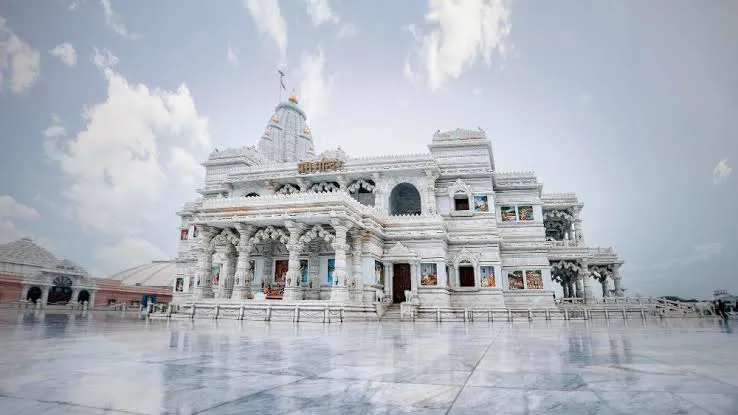
10:30 AM: Prem Mandir. The white marble is extraordinary in the morning light. Allow 45 minutes to an hour. The evening illumination and musical fountain are famous, though you will likely not have time for them on a single-day itinerary.
12:00 PM: Drive to Mathura (approximately 20 minutes by cab).
12:30 PM: Krishna Janmabhoomi. This is the birthplace temple complex. It is emotionally charged for most visitors, particularly NRIs. The small room marking the actual birthplace (the Garbha Griha) is the highlight.
2:30 PM: Dwarkadhish Temple, Mathura. One of the most important temples in the city, dedicated to Lord Krishna in his regal form. The architecture is intricate and the darshan queue moves well on weekday afternoons.
4:30 PM: Vishram Ghat for the evening aarti. This is a fitting way to end the day. The ghat is where, according to tradition, Krishna rested after slaying Kamsa. The river aarti here is peaceful and sincere.
By 6:30 PM: Begin your return journey.
This covers the key stops in both Mathura and Vrindavan in one day. You will need to move with intention. But it is doable.
2-Day Mathura Vrindavan Tour Itinerary
This is the version that actually lets you feel the place.
Day 1 — Mathura
Morning: Start at Krishna Janmabhoomi by 8 AM. Spend an hour and a half here. Then visit Dwarkadhish Temple before the midday crowd builds. After lunch (the area has plenty of vegetarian options, strictly no non-veg near the temples), spend the afternoon exploring Holi Gate Market, visiting Potara Kund if it interests you, or simply walking through the historic lanes around the temple complex before heading to Vishram Ghat for the evening aarti.
Evening: Make your way to Vishram Ghat by 5:30 PM for the Yamuna aarti. Stay for the full ceremony. This is the highlight of Day 1.
Overnight: Stay in Mathura at a comfortable hotel or check in to the ISKCON Vrindavan guesthouse the following morning.
Day 2 — Vrindavan (and optionally, Gokul)
Early morning: Banke Bihari Temple by 6:30 AM. Before the crowds arrive.
After Banke Bihari: ISKCON Vrindavan, then Nidhivan (where the legend says Krishna performs the Ras Lila every night). Nidhivan has a very particular atmosphere. Many visitors find it deeply moving.
Late morning: Prem Mandir. Take your time here.
After lunch: If you have the energy and interest, drive to Gokul (about 15 km from Mathura). This is where baby Krishna was secretly taken after his birth to protect him from Kamsa. It is quieter than Vrindavan, more rustic, and genuinely worth the half-day.
By evening, you are done. And you will feel it.
How to Get to Mathura and Vrindavan from Major Cities
From Delhi (140 km): By road, this is about 2.5 to 3 hours depending on traffic. The Yamuna Expressway makes it a smooth drive. By train, Delhi to Mathura Junction takes roughly 2 hours on express trains like the Gatimaan Express. NRIs travelling in groups or with family will find a hired car from Delhi the most comfortable option.
From Agra (57 km): About 1 to 1.5 hours by road. Very manageable as a morning trip.
From Jaipur (240 km): Approximately 5 hours by road, depending on traffic and your starting point. NRIs following the Golden Triangle route often include Mathura and Vrindavan as an extension before returning to Delhi. NRIs doing a Golden Triangle trip can add Mathura and Vrindavan as a natural extension.
Getting between Mathura and Vrindavan: Once you are in Mathura, you have three options to reach Vrindavan. A cab or taxi is the easiest option for NRIs, with one-way fares generally starting around Rs. 250 and varying based on vehicle type, season, and time of travel. Prices are indicative and subject to change. An auto-rickshaw is cheaper. E-rickshaws are widely available and work well for shorter distances within Vrindavan itself. For NRIs who prefer not to negotiate, hiring a cab for the full day from Mathura is the cleanest option.
Major Temples and Places to Visit in Mathura and Vrindavan
In Mathura:
Krishna Janmabhoomi is the non-negotiable. The complex includes the Keshav Dev Temple and the small chamber marking the exact birthplace. Modest dress is recommended. Due to the temple’s high security, mobile phones, cameras, smart watches, bags, and several personal belongings are generally not permitted inside the main complex. Cloakroom facilities are available near the entrance for depositing restricted items.
Dwarkadhish Temple dates to 1814 and is one of the finest examples of Rajasthani architecture in the region. The deity is dressed in elaborate clothing that changes daily. The temple gets busy by mid-morning so go early.
Vishram Ghat is not a temple but an experience. The Yamuna here is calm and the ghats are lined with small shrines. Evening is the right time. Boat rides are available.
In Vrindavan:
Banke Bihari Temple is the emotional centre of Vrindavan for most devotees. The unique darshan style, where the curtain is drawn every few minutes to reveal and re-veil the deity, is unlike anything you will see elsewhere. Photography is not permitted inside and this rule is enforced. Best time: during the first hour after the temple opens on a regular weekday.
ISKCON Vrindavan is clean, accessible, and very foreigner-friendly. English signage everywhere. The architecture is grand and the aarti timings are punctual.
Prem Mandir is relatively new (inaugurated in 2012) but has become one of the most visited sites in Vrindavan. The white Italian marble glows at dusk. The evening illumination is spectacular.
Keshi Ghat is one of the oldest and most picturesque ghats on the Yamuna. It is closely associated with Lord Krishna’s pastimes and is especially beautiful during sunrise and sunset. Visitors often combine it with an evening boat ride or a peaceful walk along the river.
Nidhivan is sacred but low-key. The forest here is associated with Krishna’s Ras Lila. Deeply significant for devotees.
Radha Raman Temple is one of the oldest in Vrindavan. The deity here has never left the temple since consecration, which is unusual and adds to its sanctity.
How to Get Darshan at Major Temples in Vrindavan
Each temple in Vrindavan follows its own darshan system, and it is worth checking the official website or contacting the temple directly before your visit, especially during festivals and long weekends.
ISKCON Vrindavan welcomes all visitors through its regular darshan timings. The temple also offers various sevas, donation programmes, and guest accommodation that can be arranged in advance through its official website. If you wish to participate in a specific aarti or seva, it is best to plan ahead.
Prem Mandir is open to all devotees without any entry fee. During weekends and festivals, crowds can be significant, so arriving early in the morning or before sunset helps ensure a smoother visit. The evening illumination and musical fountain are among the main highlights.
Banke Bihari Temple follows a traditional darshan system and can become extremely crowded, particularly on weekends, Ekadashi, Janmashtami, and other major festivals. The temple trust occasionally introduces special crowd-management arrangements during peak periods, so it is advisable to check the latest updates before your visit. On regular weekdays, arriving shortly after the temple opens generally offers a more comfortable darshan experience.
If you are visiting during festival season, plan your temple visits early in the day and allow extra time for security checks and queues.
Best Time to Visit Mathura and Vrindavan
October to March is the most comfortable window. Temperatures are pleasant, the skies are clear, and temple crowds are manageable on weekdays.
Janmashtami (August) is the most spiritually significant time to visit. It is Krishna’s birthday and the entire region erupts in celebration. But it is also extraordinarily crowded. If you are planning this, book your accommodation at least 3 to 4 months in advance. The same applies to Holi, which in Braj is unlike anywhere else in India. Lathmar Holi in Barsana is a full festival in itself.
For NRIs who want a quieter, more contemplative visit, October to early December is arguably the sweet spot. Cool weather, post-monsoon greenery, and thinner crowds.
Which month is least crowded? June and early July are typically the quietest months in Vrindavan. However, the summer heat in this part of Uttar Pradesh is intense, often crossing 42 to 45 degrees Celsius. Not recommended unless you have no other window.
Practical Tips for NRIs Visiting Mathura and Vrindavan
Dress code: Modest and covered attire for all temples. Avoid sleeveless tops and short skirts or shorts. Dupattas and stoles are handy to have.
Temple entry: Footwear must be removed before entering all temples. Some temple complexes may also restrict certain leather items or other belongings inside specific areas, so check the rules at the entrance. Slip-on shoes make repeated visits much easier.
Photography: Banke Bihari Temple does not allow photography inside, and this is enforced strictly. Nidhivan has restrictions too. Check at the entrance of each temple.
Cash: Many temple donation counters and prasad shops are cash-only. Carry small denomination notes.
Water: Do not drink tap water or ice from street stalls. Carry a water bottle from your hotel or buy sealed bottles.
Footwear: You will be removing your shoes repeatedly. Comfortable slip-ons or sandals are far more practical than laced shoes.
For elderly parents: The walking distances between sites in Vrindavan can be tiring. Consider hiring a local guide with a vehicle who can manage the logistics and also explain the significance of each temple. This is genuinely worth it.
Bhasma Aarti: Note that the famous Bhasma Aarti is at Mahakaleshwar Temple in Ujjain, not in Mathura or Vrindavan. In Mathura and Vrindavan, most morning and evening aartis are open to all visitors without prior booking. Arriving early is advisable during peak season.
Gokul Mathura Vrindavan Tour — Adding Gokul to Your Itinerary
Gokul does not get the attention it deserves.
When Kamsa threatened to kill the newborn Krishna, he was secretly carried across the Yamuna to Gokul, a small village roughly 15 kilometres from Mathura. This is where he spent his earliest years before moving to Vrindavan. Gokul is quieter, less commercialised, and genuinely moving for those who know the story.
The key sites are Nand Bhavan (the home of Nanda Maharaj, Krishna’s foster father) and Brahmananda Ghat on the Yamuna. Neither requires more than 2 to 3 hours.
The best way to include Gokul is as a Day 2 afternoon addition after your Vrindavan morning. Drive from Vrindavan to Gokul via Mathura, cover the two main sites, and then begin your return journey.
It adds depth to the trip. And for NRIs who want the full Braj circuit rather than just the popular temples, Gokul is the piece that completes it.
Optional Extension: Visit Govardhan
If you have an additional half day, consider visiting Govardhan, about 25 kilometres from Mathura. It is one of the most sacred places in Braj and is known for the Govardhan Parikrama, a pilgrimage route around the hill that Lord Krishna is believed to have lifted to protect the people of Braj. While completing the full parikrama takes several hours, many visitors choose to visit the main temples and experience a shorter portion of the route.
Tour Packages for Mathura and Vrindavan
For NRIs who would rather not manage logistics themselves, organised tour packages are a solid option.
IRCTC periodically offers guided Mathura and Vrindavan pilgrimage packages from Delhi, depending on the season and schedule. These typically include transport and guided sightseeing. Check the latest availability before planning your trip.
MakeMyTrip and Cleartrip offer Mathura Vrindavan tour packages ranging from single-day trips from Delhi to multi-day Braj circuit packages that include Gokul, Govardhan, and Barsana. These typically cover transport, a guide, and sometimes meals.
Private tour operators based in Agra and Delhi also run dedicated Braj pilgrimage circuits with more flexibility on timing and temple selection. These work well for groups or families with specific requirements.
The main trade-off with packages is timing. You move at the group’s pace, not yours. If lingering at Banke Bihari for an extra 30 minutes is important to you, a private cab arrangement will always be more flexible than an organised tour.
Book well in advance for Janmashtami, Holi, and long weekends. Accommodation and transport both get difficult to find last minute.
Conclusion
A visit to Mathura and Vrindavan is not just a trip. For most NRIs, it is something they carry with them long after they leave. The ghats at sunrise. The curtain at Banke Bihari. The sound of bells echoing through old temple corridors. These are the kind of memories that stay.
With the right planning, this visit is entirely manageable even with limited days in India. Start with Mathura. Allow two days where possible. Arrive at Banke Bihari early. Book VIP darshan in advance if you are visiting during festival season. And carry cash for temple donations.
If you own property in Delhi NCR or nearby and want it professionally managed while you travel or live abroad, Housewise offers end-to-end property management across 23 Indian cities so your home is always in safe hands while you are away.
Disclaimer: Temple timings, darshan booking processes, and taxi fares are subject to change. Please verify current details directly with the respective temples before your visit.
Frequently Asked Questions
Is 2 days enough for Mathura and Vrindavan?
Yes, 2 days is the ideal duration. Day 1 covers Mathura’s temples and ghats. Day 2 is for Vrindavan’s major sites. Two days also allows for an optional visit to Gokul or Govardhan if you want to extend the itinerary.
How to get VIP darshan in Vrindavan?
At ISKCON and Prem Mandir, VIP or priority darshan can be booked online through the temple’s official website or at the counter on arrival. At Banke Bihari, special arrangements can be made through the temple trust or authorised local priests. Book in advance for weekends and festival seasons.
Where should I go first Mathura or Vrindavan?
Start with Mathura. Visit Krishna Janmabhoomi and Vishram Ghat first, then proceed to Vrindavan. This follows the natural sequence of Krishna’s story and is also the geographically logical route.
Is it possible to visit Mathura and Vrindavan in one day?
Yes, but it will be fast-paced. Start by 6:30 AM at Banke Bihari, cover ISKCON and Prem Mandir, then move to Mathura for Janmabhoomi and the evening aarti at Vishram Ghat. Two days is strongly recommended if you have the time.
Which month is less crowded in Vrindavan?
June and early July are the quietest months, though the heat is intense. October to December offers the best combination of pleasant weather and manageable crowds. Avoid Janmashtami and Holi unless you specifically want the festival experience.
How much is a taxi from Mathura to Vrindavan?
A one-way taxi typically costs between Rs. 200 and Rs. 400 depending on vehicle type and time of day. These are indicative prices and subject to change. Auto-rickshaws and e-rickshaws are cheaper alternatives. For NRIs, hiring a full-day cab from Mathura is the most convenient option.
Which is better supadam darshan or VIP break darshan?
Supadam darshan offers a closer and more personal experience with a smaller group. VIP break darshan allows entry during a scheduled break in the general queue. For NRIs who want a less hurried and more intimate experience, supadam darshan is generally the better choice where available.
At what time is Banke Bihari Temple less crowded?
The temple is least crowded before 8 AM on weekdays. Weekends and festival days are significantly busier throughout the day. The temple closes midday and reopens in the afternoon, and the early afternoon session is also relatively quieter than the peak morning rush.


0 Comments