
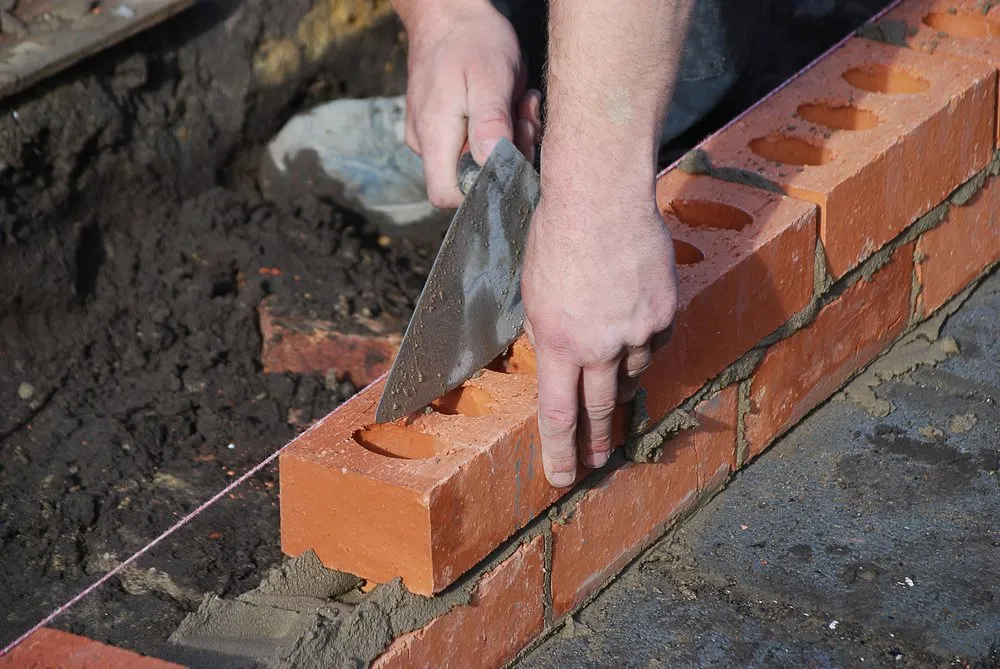
Brick masonry is one of the oldest construction techniques in human history. People have stacked bricks to build homes, walls, and monuments for thousands of years. The practice continues today because it works.
But here is something many beginners don’t realize. You cannot simply stack bricks on top of each other like building blocks. If you do, the wall will crack. It might even fall over.
The secret lies in something called brick bonds.
A brick bond is the pattern you use to arrange bricks in a wall. These patterns ensure that bricks lock together properly. They spread weight evenly. They stop cracks from running straight through the wall.
In this guide, I will walk you through the different types of brick bonds used in construction. You will learn about English bond, Flemish bond, stretcher bond, and many others. I will explain where each bond works best and why builders choose one pattern over another.
Let us start with the basics.
What Is a Brick Bond?
A brick bond is the organized pattern of bricks in a wall. It determines how each brick sits next to and above the bricks around it.
Think of it like a puzzle. Each piece must fit perfectly with the pieces beside it and below it. When the pattern works, the whole structure becomes stronger than the sum of its parts.
The main purposes of bonds in brick masonry are:
Load distribution. When you press down on a wall, the force travels through the bricks and into the ground. Good bonding spreads this force evenly so no single brick carries too much weight.
Strength through interlocking. Bricks that overlap properly resist pulling forces. They hold together even when the ground shifts or strong winds push against the wall.
Avoiding continuous vertical joints. This is the golden rule of wall bonding. If vertical joints line up across multiple rows, cracks will follow those straight lines. Good bonds stagger these joints so cracks cannot travel far.
Builders have developed many brickwork bond types over centuries. Each solves specific problems or creates particular looks.
Basic Brick Terminology Used in Bonds
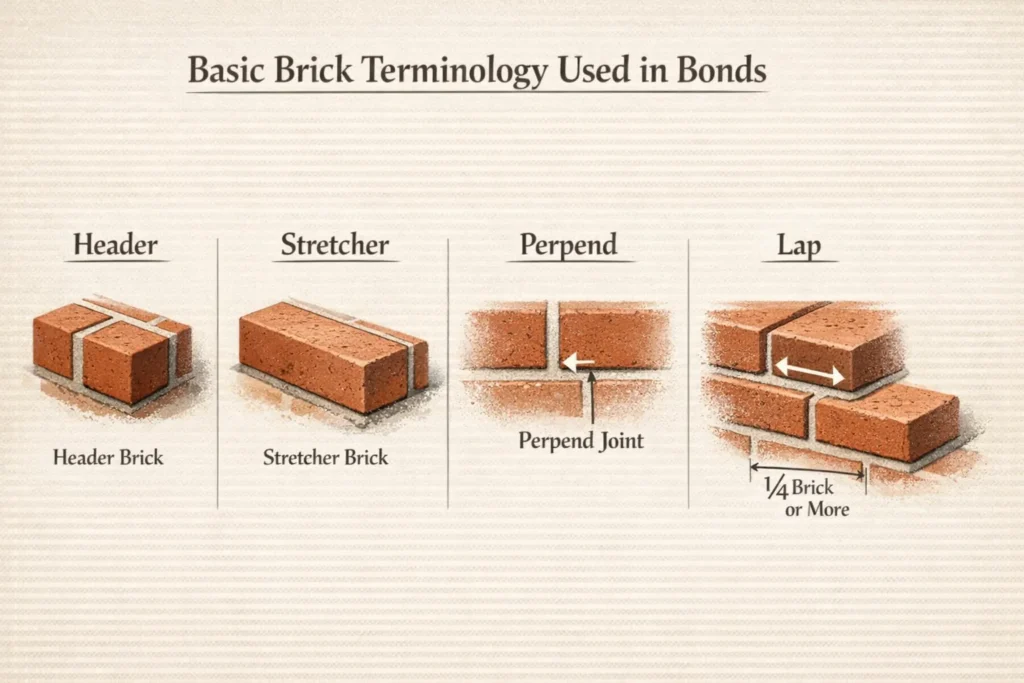
Before we explore the different types of brick bonds, you need to know some basic terms. These words describe how bricks sit in a wall.
Header
A header is a brick laid with its shorter end facing outward. You see the small rectangular face on the wall surface. The length of the brick runs back into the wall.
Headers tie the wall together from front to back. They are essential in thick walls.
Stretcher
A stretcher is a brick laid with its longer side facing outward. You see the long, rectangular face on the wall surface. The brick runs parallel to the wall.
Stretchers create the visible surface of most walls. They cover ground quickly.
Perpend
The perpend is the vertical joint between two bricks in the same row. Builders call it a perpend joint. These joints must align vertically in some patterns and stagger in others.
Lap
The lap is the distance one brick overlaps the bricks below it. Proper lap ensures that vertical joints do not line up. In most bonds, the lap should be at least one-quarter of a brick’s length.
I recently visited a construction site where a new mason ignored the lap rule. The wall looked fine at first glance. But when I ran my finger down the face, I could feel the continuous joint. That wall will crack within a year.
Major Types of Brick Bonds
Now we get to the main event. Here are the types of masonry bonds you will encounter in construction.
English Bond
English bond is the strongest brick bond in common use. It follows a simple rhythm: one row of headers, then one row of stretchers, then headers again, and so on.
When I worked as a junior engineer, my supervisor made me practice English bond for two weeks before he let me touch a real wall. “Get this right,” he said, “and everything else comes easy.” He was right.
Characteristics of English bond:
The pattern creates exceptional strength. Each header course ties the wall together from front to back. The stretcher courses build the wall’s length. Together, they create a structure that resists both vertical and horizontal forces.
Construction is straightforward. You lay one complete course of headers. Then you lay one complete course of stretchers. Repeat until the wall reaches its height.
The only trick involves corners and ends. You need special bricks called closers to maintain the pattern at these points.
Uses of English bond:
Builders use english bond brickwork for:
- Load-bearing walls that carry heavy weights from above
- Foundation walls that sit below ground level
- Thick walls where strength matters more than appearance
- Retaining walls that hold back soil
English bond in brick masonry appears plain compared to decorative patterns. But its strength makes it the go-to choice for serious structural work.
Flemish Bond
Flemish bond creates a more decorative appearance than English bond. In each course, headers and stretchers alternate. You lay one header, then one stretcher, then another header, and so on across the wall.
The next course offsets the pattern. Headers sit above stretchers, and stretchers sit above headers.
Types of Flemish Bond:
Single Flemish bond mixes patterns. The front face of the wall shows the Flemish pattern with alternating headers and stretchers. But behind this face, the builder uses English bond construction. This approach gives you a good-looking front wall with the strength of English bond throughout.
Double Flemish bond shows the Flemish pattern on both sides of the wall. Both faces display alternating headers and stretchers. The inside of the wall fills with brick bats and mortar to connect the two faces.
I once helped restore an old warehouse that used double Flemish bond. The exterior walls had stood for over a century with minimal maintenance. The pattern kept water out and held the structure together through decades of use.
Advantages of Flemish bond:
- Attractive appearance makes it suitable for visible walls
- Good strength when properly constructed
- Economical use of bricks because headers and stretchers share courses
- Faster construction than some complex decorative bonds
Flemish bond in brick masonry works well for boundary walls, garden walls, and building facades where appearance matters.
Difference Between English Bond and Flemish Bond
Many students ask me about the difference between English bond and Flemish bond. The comparison helps understand both patterns better.
| Feature | English Bond | Flemish Bond |
|---|---|---|
| Pattern | Entire courses of headers alternate with entire courses of stretchers | Headers and stretchers alternate within each course |
| Strength | Stronger for heavy loads | Slightly weaker but still adequate for most walls |
| Appearance | Simple, functional look | Decorative, textured look |
| Construction | Easy to learn and execute | Requires more attention to maintain pattern |
| Material use | Uses more whole bricks | May require more half-bricks at ends |
| Best applications | Foundations, load-bearing walls, thick walls | Boundary walls, facades, garden walls |
The english bond and flemish bond difference comes down to priorities. Choose English bond when strength matters most. Choose Flemish bond when appearance matters too.
Stretcher Bond
Stretcher bond is the simplest brick bond pattern. Every brick lays as a stretcher with its long face showing. Each new course offsets by half a brick so vertical joints stagger.
Characteristics of stretcher bond:
This pattern creates a wall that is only one brick thick. The wall has no headers to tie it together from front to back. For this reason, stretcher bond in brick masonry works only for half-brick walls.
Construction moves quickly because every brick sits the same way. You do not need to switch between headers and stretchers. This speed makes it popular for certain applications.
Uses of stretcher bond:
- Cavity walls where two separate walls connect with metal ties
- Partition walls inside buildings that carry no heavy loads
- Facing bricks over concrete or block walls
- Garden walls of limited height
Stretcher bond brick walls cannot bear heavy loads from above. The lack of headers means the wall has little thickness to resist bending forces.
I once saw a homeowner try to use stretcher bond for a retaining wall. The wall bulged outward within months. The soil pressure simply pushed the thin wall out of shape. Always match the bond to the job.
Header Bond
Header bond takes the opposite approach. Every brick lays as a header with its short face showing. Each course offsets by half a brick width.
Characteristics of header bond:
This pattern creates a wall that is one brick thick but with all bricks running through the wall depth. Every brick ties the front and back together. The result is a strong wall for its thickness.
The visible surface shows only the small ends of bricks. This creates a textured appearance different from other bonds.
Uses of header bond:
- Curved walls where stretchers would not fit properly
- Thick walls requiring maximum front-to-back connection
- Foundation courses where strength matters most
- Decorative features needing a different texture
Header bond in brick masonry appears less common than stretcher or English bond. But it serves specific purposes well.
Garden Wall Bonds
Garden wall bonds evolved for low-height walls around gardens and boundaries. These walls need less strength than building walls but still require proper bonding.
English Garden Wall Bond:
This pattern follows the logic of English bond but with more stretchers between header courses. The typical pattern shows three stretcher courses followed by one header course.
The extra stretcher courses speed up construction. The occasional header courses tie the wall together enough for garden use.
Flemish Garden Wall Bond:
This pattern modifies Flemish bond for garden walls. In each course, you place three stretchers between each header. The pattern repeats across the wall.
The effect creates a more open appearance than standard Flemish bond. It uses fewer headers so construction goes faster.
Both garden wall bond types work well for:
- Boundary walls around properties
- Garden borders and raised beds
- Low retaining walls holding minimal soil
- Decorative screens where appearance matters
Facing Bond
Facing bond addresses a specific problem. Sometimes walls have different materials on the outside and inside. The facing might use expensive bricks while the backing uses cheaper materials.
Facing bond in brick masonry connects these different layers. Headers from the facing brick extend back into the backing material. This ties everything together so the wall acts as one unit.
Builders use facing bond for:
- Cavity walls with brick outer leaf and block inner leaf
- Composite walls mixing brick and stone
- Restoration work matching old materials with new
- Budget construction using expensive facing only where visible
Dutch Bond
Dutch bond improves on English bond. It keeps the alternating header and stretcher courses but adds a detail at corners.
In standard English bond, corners need special bricks called closers to maintain the pattern. Dutch bond eliminates closers by starting alternate courses with three-quarter bricks.
The result looks cleaner and more uniform at corners. Dutch bond in brick masonry appears often in regions with Dutch architectural influence.
Raking Bond
Raking bond places bricks at angles within the wall. Instead of laying flat, some bricks tilt to create diagonal patterns.
Types of raking bond:
Diagonal bond places bricks at 45-degree angles to the wall face. These angled bricks tie the wall together in multiple directions. The pattern works well for very thick walls where simple headers might not reach across.
Herringbone bond creates V-shaped patterns within the wall. Bricks lay at opposing 45-degree angles to form a zigzag. This pattern distributes forces efficiently and looks decorative.
Raking bond appears most often in:
- Very thick walls requiring extra reinforcement
- Pavement brickwork where load spreading matters
- Decorative panels within larger walls
- Historical restoration matching original construction
Zigzag Bond
Zigzag bond creates a distinctive sawtooth pattern on the wall surface. Bricks lay at angles so their ends project forward and back.
This pattern serves almost entirely decorative purposes. It creates dramatic shadow lines as sunlight moves across the wall.
Zigzag bond works best for:
- Feature walls in gardens and courtyards
- Fireplace surrounds needing visual interest
- Boundary walls where appearance matters most
- Flooring patterns in outdoor areas
Importance of Brick Bonds in Construction
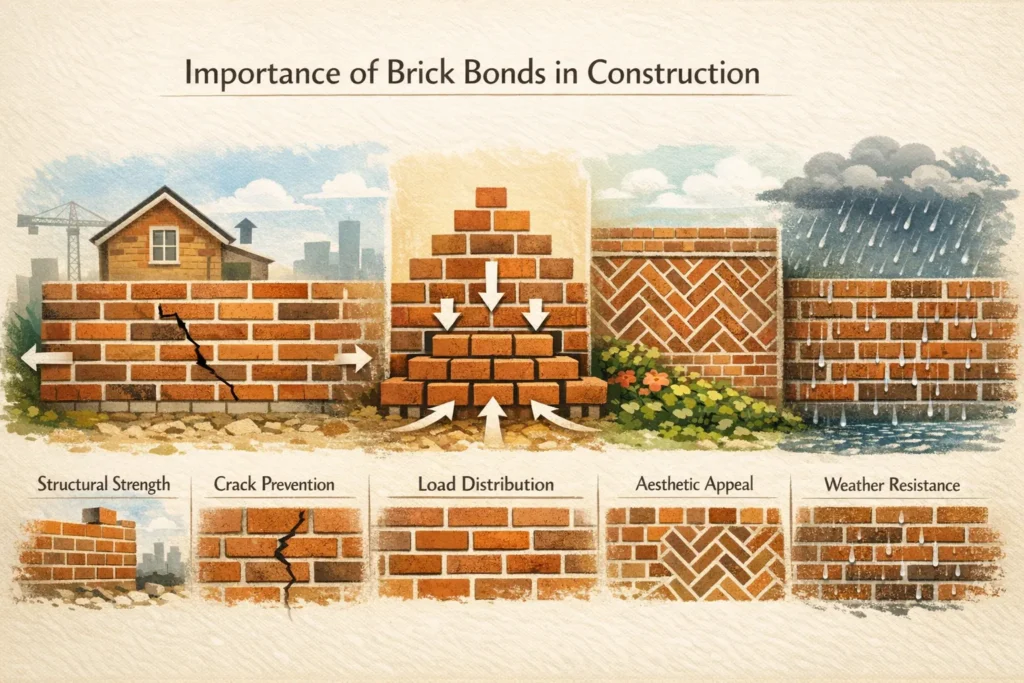
You might wonder why bonds in brick work matter so much. After watching walls fail over many years, I can tell you the reasons.
Structural strength. Properly bonded walls resist forces from above, from the side, and from ground movement. They stand for decades with minimal maintenance.
Crack prevention. Staggered joints stop cracks from running through the wall. A crack might start, but it hits a brick rather than following a continuous joint.
Load distribution. Weight spreads across multiple bricks rather than concentrating on weak points. This prevents local failures that could spread.
Appearance. Some bonds create beautiful patterns. The right bond turns a functional wall into a design feature.
Weather resistance. Good bonding reduces water penetration. Water finds it harder to follow the staggered joints into the wall.
Factors That Influence Choice of Brick Bond
Engineers consider several factors when selecting types of brick work for a project.
Wall thickness. Thin walls need simple bonds like stretcher bond. Thick walls require headers to tie the layers together.
Structural load. Heavy loads demand strong bonds like English bond. Light loads allow more decorative options.
Aesthetic requirements. Visible walls might use Flemish or Dutch bond for better appearance. Hidden walls can use simpler patterns.
Construction speed. Some bonds build faster than others. Stretcher bond goes up quickly. Complex raking bonds take time and skill.
Material availability. Some bonds need more half-bricks or special shapes. If these are hard to get, choose a different bond.
Budget. Skilled labor costs money. Complex bonds require experienced masons who charge higher rates.
Climate considerations. Wet climates need bonds that shed water effectively. Windy areas need extra strength.
Common Mistakes in Brick Bonding
I have seen many errors in brick bonding over my career. Learn from these mistakes.
Continuous vertical joints. This is the most common error. When joints line up across multiple courses, the wall has built-in crack lines.
Improper lap. Bricks must overlap the bricks below by at least one-quarter of their length. Less than this creates weak points.
Incorrect alignment. Bricks that lean forward or backward create stress points. The wall may bulge or crack over time.
Poor mortar filling. Gaps in mortar joints let water in and reduce strength. Every joint must fill completely.
Rushing corners. Corners need careful attention. Mistakes here affect the entire wall.
Ignoring expansion joints. Long walls need gaps to allow for temperature movement. Without them, the wall will crack.
Conclusion
Brick bonds determine the strength and durability of masonry walls. The pattern you choose affects how the wall performs for decades to come.
Several bonding patterns exist for different purposes. English bond provides maximum strength for heavy loads. Flemish bond adds decorative appeal while maintaining good strength. Stretcher bond builds thin walls quickly. Header bond creates curved walls and strong foundations. Garden wall bonds balance strength with speed for low walls.
Choosing the right bond ensures structural stability and efficient load transfer. It prevents cracks and extends the life of your wall. Whether you build a foundation, a boundary wall, or a decorative garden feature, the right bond makes all the difference.
Take time to understand these types of brick bonds before you start your next project. Your wall will stand stronger and last longer because of it.
FAQs
What is the strongest brick bond?
English bond is the strongest brick bond. Alternating header courses tie the wall together front to back. This pattern distributes loads evenly and resists cracking better than other bonds.
What is the difference between English bond and Flemish bond?
English bond uses complete courses of alternating headers and stretchers. Flemish bond mixes headers and stretchers within each course. English is stronger. Flemish looks more decorative.
Which brick bond is best for walls?
English bond works best for load-bearing walls. Stretcher bond suits partition walls. Flemish bond suits boundary walls where appearance matters. Match the bond to your specific needs.
What is a header in brick masonry?
A header is a brick laid with its short end facing outward. The brick length runs back into the wall. Headers tie the wall together from front to back.
What is a stretcher in brick masonry?
A stretcher is a brick laid with its long side facing outward. The brick runs parallel to the wall face. Stretchers create most of the visible wall surface.
Why are brick bonds important?
Bonds prevent continuous vertical joints that cause cracking. They distribute loads evenly across the wall. They improve structural strength and weather resistance. Proper bonding extends wall life.
What is the difference between single and double Flemish bond?
Single Flemish bond shows Flemish pattern on the face only with English bond backing. Double Flemish bond shows the pattern on both sides. Double Flemish costs more but looks better.
Where is stretcher bond used?
Stretcher bond works for cavity walls, partition walls, and thin garden walls. It builds quickly but cannot carry heavy loads. The wall is only one brick thick.
What is garden wall bond?
Garden wall bond uses three stretcher courses followed by one header course. It balances strength with construction speed. Builders use it for low boundary and garden walls.
What happens if brick bonds are done wrong?
Wrong bonding creates continuous vertical joints. The wall develops cracks along these lines. Water enters through gaps. The structure weakens and may eventually fail.


0 Comments