
It’s the first of the month. You check your bank account. The rent isn’t there.
Your heart drops. The pressure is on.
You start thinking about your own bills. Your mortgage. Your expenses. It’s a sinking feeling every landlord knows too well.
Late rent is one of the most common issues you’ll face as a landlord. It’s almost guaranteed to happen at some point. And how you handle it makes all the difference.
Mess it up, and you could face financial loss. You could create a legal headache. Or you could start a feud with your tenant that drags on for months.
But handle it right, and you keep things professional. You protect your cash flow. And you stay on the right side of the law.
This guide covers everything you need. We’ll look at templates, legal steps, and the best practices to keep your cool and get paid.
What Is a Late Rent Notice?
Let’s start with the basics.
A late rent notice is a formal document you send to a tenant. It tells them the rent is overdue. It asks them to pay up.
Think of it as a gentle nudge wrapped in a legal wrapper. Its main job is to remind. But it’s also your first piece of official documentation.
If things go south and you end up in court, this notice proves you tried to resolve things. It shows you followed the rules.
So it’s not just a reminder. It’s a record. It’s your proof that you gave the tenant a fair chance.
When Should You Send a Late Rent Notice?
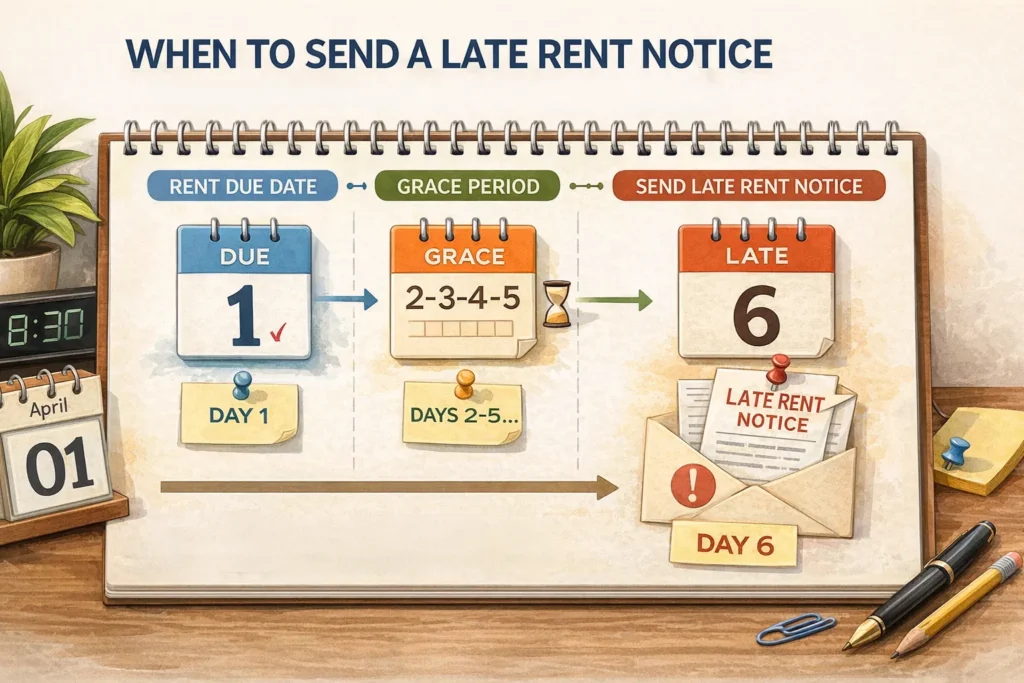
Timing is everything. Send it too early, and you look impatient. Send it too late, and you lose momentum.
Here’s a typical timeline most landlords follow:
- Rent due date: This is Day 1. Usually the first of the month.
- Grace period: Many leases include a grace period. This is extra time you give the tenant before you charge a late fee. It’s usually 3 to 5 days.
- Send the notice: After the grace period ends. So if rent is due on the 1st and you have a 5-day grace period, you send your notice on the 6th.
Your lease agreement is your guide. It should spell out the due date and the grace period. Local laws can also affect this timeline.
If you’re asking yourself, how long can you be late on rent before you take action? The answer is usually right after that grace period ends. Don’t wait longer. It sets a bad precedent.
Types of Rent Notices Landlords Use
Not every late payment is a crisis. You need different tools for different situations.
Friendly Rent Reminder
This is your soft touch. You send it before the due date or right after. The tone is polite. It assumes the tenant simply forgot.
It’s not a formal notice. It’s a text or a short email. It keeps the relationship warm while still holding the tenant accountable.
Late Rent Notice
This is your official first notice. You send it after the grace period. The tone is firm but professional. It’s no longer an assumption of forgetfulness. It’s a statement of fact: the rent is late, and here’s what you owe.
Past Due / Overdue Rent Notice
If the first notice doesn’t work, you escalate. This notice has stronger wording. It includes the total outstanding amount. It might mention the late fees that have accumulated. The message is clear: time is running out.
Pay or Quit Notice
This is the big one. It’s your final warning before you start the eviction process. This notice is legally binding. It tells the tenant they have a specific number of days to pay the full amount or move out.
In many places, this is a required legal step before you can file an eviction lawsuit. It’s often called a late rent eviction notice. Treat it with the seriousness it deserves.
What to Include in a Late Rent Notice
A good notice leaves no room for confusion. It should be a single page with all the key details. Here’s your checklist.
- Tenant name: The full legal name of everyone on the lease.
- Property address: The full address of the rental unit.
- Rent due date: The date the rent was originally due.
- Overdue amount: The total rent that hasn’t been paid.
- Late fees: Any additional fees the lease allows.
- Total amount due: The sum of overdue rent and late fees.
- Payment deadline: The final date they have to pay before further action is taken.
- Consequences: A clear statement of what happens if they don’t pay by the deadline. This could be eviction.
Make it simple. Make it clear. No one should have to guess what you’re asking for.
Late Rent Notice Template (Copy-Paste Ready)
Here is a solid template you can use. It covers all the essentials.
Subject: Notice of Late Rent Payment
Dear [Tenant Name],
This notice is to inform you that your rent for the property located at [Property Address] is past due. The payment was due on [Due Date], and we have not yet received it.
As of today, the outstanding amount is ₹[Amount]. This total includes a late fee of ₹[Late Fee], as outlined in your lease agreement.
Please arrange to pay the full amount by [Final Date]. If we do not receive payment by this date, we will proceed with further action as allowed by the lease and local law.
If you have already made this payment, please disregard this notice. You can contact us at [Contact Details] if you have any questions or need to discuss a payment arrangement.
Sincerely, [Landlord Name]
This late rent notice template is a great starting point. You can adapt it for different situations. For a simpler rent late notice template, just remove the part about further action and keep it as a reminder.
Friendly Reminder Template
For those times when you want to be extra polite, use this.
Hi [Tenant Name],
I hope you’re doing well. Just a quick reminder that your rent for the property at [Address] is due on [Date].
If you’ve already made the payment, please ignore this message. If not, kindly process it at your earliest convenience. Let me know if you have any questions.
Thanks!
Past Due Rent Notice Template
When the friendly reminder doesn’t work, you get more direct.
Subject: Past Due Rent Notice
Dear [Tenant Name],
This is a formal notice that your rent payment for [Month] is now past due. Your payment was due on [Due Date] and has not been received.
The total outstanding amount on your account is ₹[Amount].
You must pay this amount in full within [X days] of the date of this notice. Failure to do so will result in further action, including the possibility of legal proceedings as permitted by your lease agreement.
Sincerely, [Landlord Name]
Late Fees and Charges
Late fees are a big topic. They are your tool to discourage late payments. But you can’t just make up a number.
The late fee must be in your lease agreement. It’s a rule you both agreed to at the start.
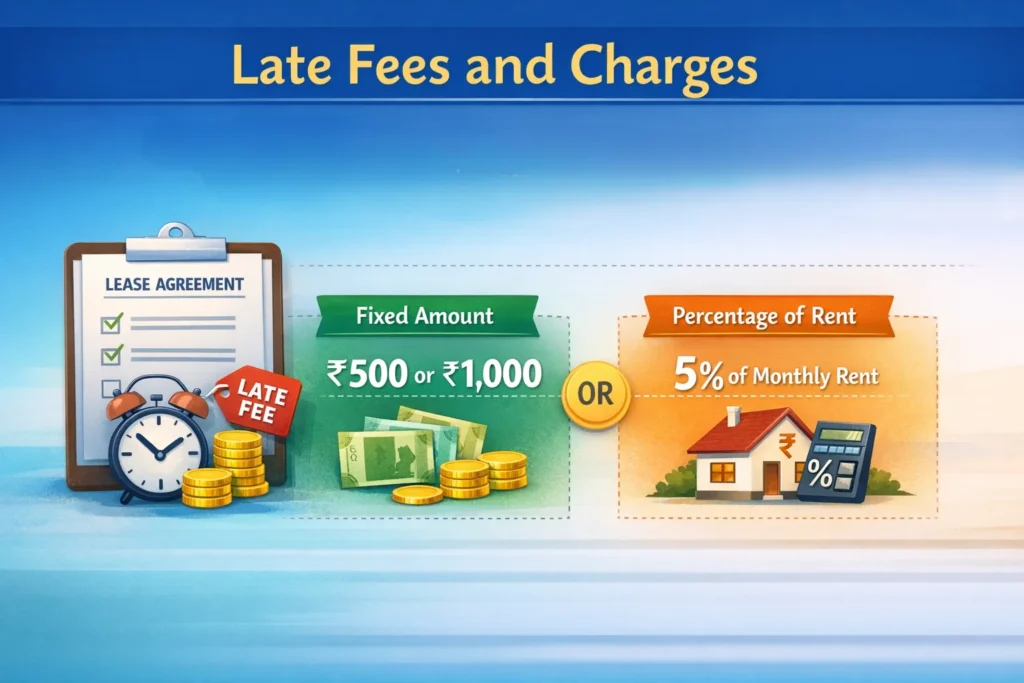
Typically, a late fee is either:
- A fixed amount, like ₹500 or ₹1,000.
- A percentage of the monthly rent, like 5%.
Make sure your fee is reasonable. Some local laws have limits on how much you can charge. If your fee is too high, a court might not enforce it.
When you send your late fee for rent notice, make sure the fee is clearly listed as a separate line item from the rent.
Legal Considerations
This is where things get serious. The law is not on your side if you cut corners.
Your lease agreement is your rulebook. It governs everything. The steps you take, the notices you send, the fees you charge. It all comes back to that document.
Eviction rules are not the same everywhere. They vary by state, and sometimes even by city. One place might let you file for eviction after three days. Another might require a 15-day notice period.
Here’s a golden rule: always check your local rent control laws. These laws can dictate how much you can raise rent, when you can evict, and what notices you must use.
I recently worked with a landlord who thought he could evict a tenant after one missed payment. He sent a harsh notice immediately. But his local law required a 10-day grace period. His notice was invalid. He had to start the whole process over. It cost him time, money, and a lot of stress.
Don’t be that landlord. Know your local rules before you send anything.
Acceptable Reasons for Late Rent
It’s easy to get angry when rent is late. But sometimes, life happens. There are valid reasons for a delay.
Common acceptable reasons include:
- A sudden job loss.
- A medical emergency or hospitalization.
- A banking error that delayed a transfer.
I’m not saying you should waive the late fee every time. But understanding the why behind the late payment can change how you handle it. If a tenant is going through a genuine crisis, showing a little flexibility can build a lot of loyalty.
It’s the difference between a one-time problem and a permanent enemy.
How to Handle Late Rent Professionally
Your reaction sets the tone. If you fly off the handle, the situation gets worse. If you stay calm and professional, you keep control.
Here are a few best practices.
- Stay calm and professional: Don’t take it personally. It’s a business transaction. Your goal is to get paid, not to win an argument.
- Document everything: Every email, every text, every conversation. Write it down. Keep copies of every notice you send. This is your evidence if you end up in court.
- Communicate clearly: Use the templates above. Be direct. Don’t hint. Don’t imply. State the facts and the deadline.
- Avoid emotional responses: Don’t send angry texts. Don’t make threats you can’t legally follow through on. Keep your emotions in check. A professional tone always wins.
Payment Plans for Late Rent
Sometimes, the best solution isn’t eviction. It’s a simple payment plan for late rent.
Let’s say a tenant lost their job but just got a new one. They can’t pay the full amount now, but they can pay half now and half in two weeks.
A payment plan is a written agreement. It outlines:
- The total amount owed.
- The amount to be paid now.
- The date for the next payment.
- The consequences if they miss a payment.
This approach has huge benefits. You avoid the cost and time of eviction. You keep a paying tenant in place. And you show you’re a reasonable person.
It’s often a win-win.
Common Mistakes Landlords Make
Even experienced landlords mess up. Here are the big ones to avoid.
- Delaying the notice: You wait because you feel bad. You think they’ll pay tomorrow. But every day you wait, you lose leverage. Send the notice on time.
- Using an aggressive tone: You send a “pay or quit” notice on day one. You threaten to evict before you even know what’s going on. This escalates a situation that could have been solved with a simple phone call.
- Not following the legal process: You skip a step. You use the wrong notice. You don’t follow the exact timeline. In court, one wrong step can get your case dismissed.
- Not documenting communication: You have a conversation on the phone. You don’t write it down. A week later, you can’t remember what was said. Always confirm important conversations in writing.
How Tenants Should Respond (Optional Section)
This guide is for landlords, but it helps to see the other side. If you are a tenant and you get a late notice, here is how to respond well.
- Communicate early: Don’t wait for the notice. If you know you’ll be late, tell your landlord before the due date. Most landlords appreciate the heads up.
- Provide a timeline: Tell them exactly when you will pay. “I will have the full amount on Friday” is much better than “I’ll pay soon.”
- Request a payment plan: If you can’t pay the full amount, ask for a plan. Be specific about what you can afford and when.
- Put it in writing: Send a late rent payment letter to landlord. This makes your promise official and shows you’re serious.
A proactive tenant is almost always treated better than one who hides.
Digital Tools for Rent Collection & Notices
We live in a digital world. Use it to your advantage.
There are many rent collection apps designed for landlords. These tools can:
- Accept online payments.
- Send automated reminders.
- Track who has paid and who hasn’t.
- Generate digital receipts.
I use one myself. I set it to automatically send a friendly reminder to tenants two days before rent is due. Then, if payment isn’t received by the 5th, it sends a formal late notice automatically. It saves me hours of manual work and removes the emotional friction from the process.
Automation is your friend. It makes the process feel less personal and more professional.
Conclusion
Late rent is a part of being a landlord. It’s not a matter of if, but when.
But it doesn’t have to be a disaster. It doesn’t have to ruin your relationship with a tenant. And it shouldn’t put your finances in jeopardy.
By using proper notices, you protect yourself. You build a professional reputation. And you create a clear path to getting paid.
Send the notice on time. Keep the tone professional. Document every step. And when possible, offer a path to a solution.
It’s not just about collecting money. It’s about managing a business with consistency and fairness.
FAQs
What is a late rent notice?
A formal document sent to a tenant informing them rent is overdue. It serves as a reminder, a request for payment, and a legal record if eviction becomes necessary later.
When should I send a late rent notice?
Send it after your lease’s grace period ends. If rent is due on the 1st and you have a 5-day grace period, send the notice on the 6th. Don’t wait longer.
Can I charge a late fee?
Yes, but only if the late fee is clearly stated in the signed lease agreement. Without it in writing, you cannot legally charge one.
How much can I charge for a late fee?
It depends on local laws and your lease. Most landlords charge a fixed amount or a small percentage of rent. Check your local regulations to ensure your fee is reasonable and legal.
What is a pay or quit notice?
A final warning before eviction. It gives the tenant a specific number of days to pay the full overdue rent or vacate the property. It’s a legally required step in most eviction processes.
Do I need a lawyer to send a late notice?
No, you can send the first few notices yourself using templates. However, if the situation escalates to eviction, it’s wise to consult a lawyer to ensure you follow all legal procedures correctly.
How should I deliver the notice?
Deliver it in a way you can prove. Hand delivery with a witness, certified mail with return receipt, or posting it on the door with a photo are all reliable methods. Keep proof of delivery.
What if the tenant pays after I send the notice?
Accept the payment. The notice has served its purpose. Keep a record of the payment and move on. No further action is needed unless the tenant becomes consistently late.
Can I evict a tenant for one late payment?
Yes, you can start the eviction process if the lease allows it. However, many landlords first try communication or a payment plan. Eviction is costly and time-consuming, so it’s often a last resort.
What is a reasonable grace period?
3 to 5 days is standard. It gives tenants a small buffer for banking delays or forgetfulness without encouraging habitual late payments. Your lease should clearly state the grace period.


0 Comments