
You cleaned your room last weekend. Top to bottom. Every surface. You were proud of it.
Then you walked in three days later and… there it was. A thin grey film on the nightstand. Dust on the TV. That familiar sneeze.
It feels like fighting a losing battle. But it doesn’t have to.
Dust is one of those problems that seems minor until it isn’t. It triggers allergies. It makes breathing harder. It settles on everything you own. And if you’re not cleaning it the right way, you’re basically just moving it around.
This guide breaks down exactly what causes dust, why it keeps coming back, and eight practical ways to actually deal with it.
Why Is There So Much Dust in Your Room?
Before you fix a problem, you need to understand it.
Dust isn’t just “dirt.” It’s a mix of many things: dead skin cells, fabric fibres from clothes and bedding, pet dander, pollen, and tiny particles that hitch a ride in from outside. The average person sheds about 30,000 to 40,000 skin cells per hour. All of those go somewhere.
Your bedroom, specifically, is a dust factory. You spend eight hours a day there. You’re shedding. Your bedding is shedding. If you have pets, they’re definitely shedding.
There’s also the airflow problem. Air moves around your room constantly, carrying particles with it. When the air slows down, particles settle on flat surfaces. This is why your bookshelf always looks dusty. It’s basically a landing strip.
What Makes Dust Build Up Faster?
Some rooms dust faster than others. Here’s why.
Carpets and rugs are dust traps. They hold onto particles that hard floors would let you sweep or mop away. Every time you walk across a carpet, you release a small dust cloud.
Clutter gives dust more surfaces to settle on. More objects, more dust. Simple maths.
Dirty air filters mean your HVAC or AC system is recirculating dusty air instead of cleaning it. Think of it like using a dirty sponge to clean a dish.
Open windows let in outdoor dust and pollen. Especially in cities or near construction.
Rarely washed fabrics, like curtains, cushion covers, and throw blankets, hold onto dust fibres like velcro.
8 Proven Ways to Get Rid of Dust in Your Room
1. Dust Surfaces Properly (Not Just Move It Around)
This is where most people go wrong.
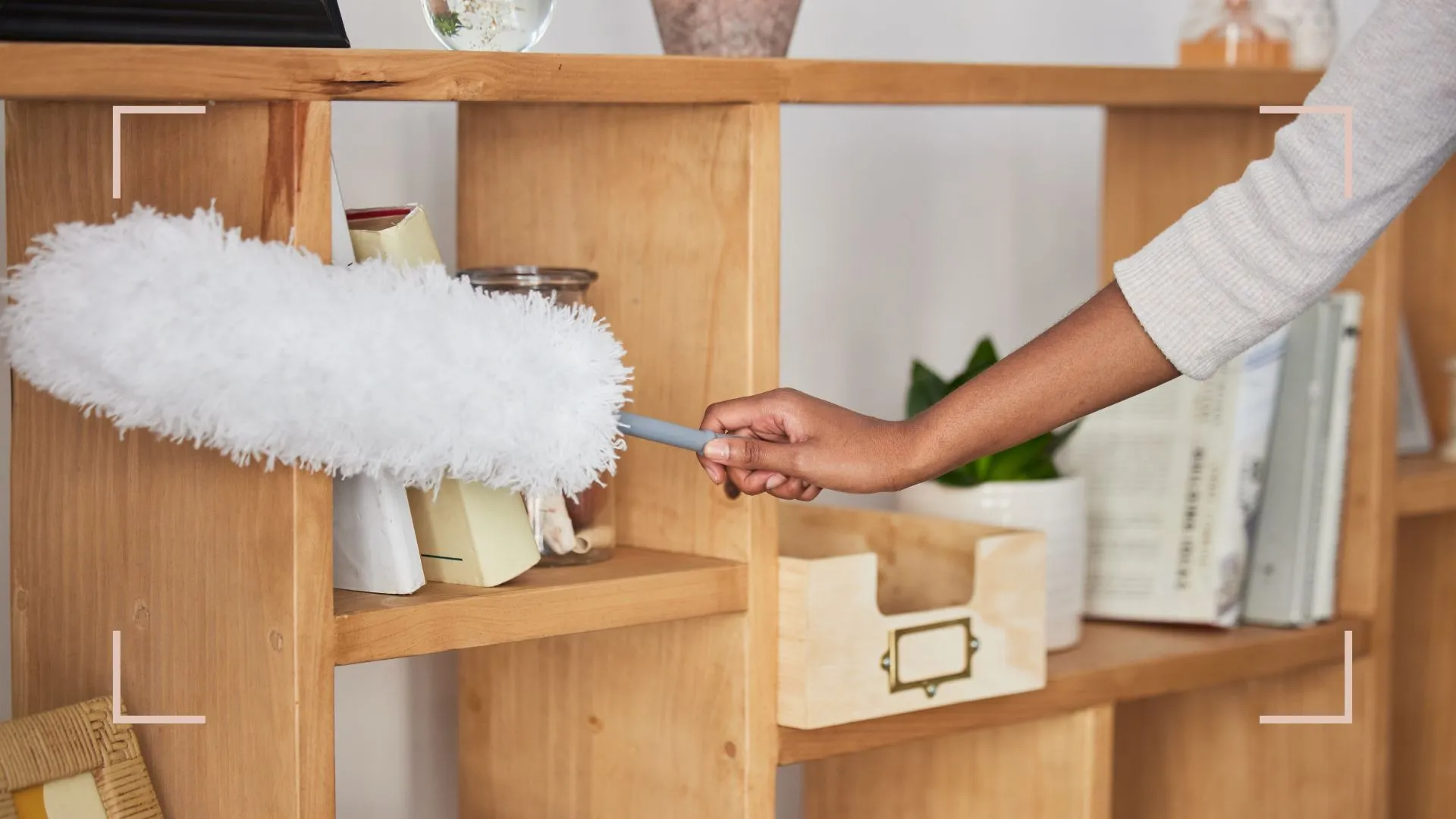
Dry dusting with an old cloth or feather duster doesn’t remove dust. It relocates it. You knock it off the shelf, it floats into the air, then it lands right back down.
Use a microfibre cloth instead. Microfibre works differently from regular fabric. The tiny fibres create a static charge that grabs dust particles and holds them. Think of it like a magnet versus a broom.
Always clean top to bottom. Ceiling fans first. Shelves next. Tables after that. Floors last. If you start at the floor and work upward, you’ll just keep re-dusting as particles fall from above.
Lightly dampen the cloth if the surface allows it. A barely-wet microfibre picks up far more than a dry one.
2. Vacuum Regularly, Especially Carpets and Beds
If you only have a regular vacuum, it might be making things worse. Standard vacuums without proper filters can push fine particles back into the air.
Use a HEPA vacuum. HEPA stands for High-Efficiency Particulate Air. These filters capture 99.97% of particles down to 0.3 microns. That includes dust mites, pollen, and pet dander.
Don’t forget your mattress. Seriously. Your bed is one of the dustiest surfaces in your room. Dust mites thrive in bedding. Vacuum your mattress every few weeks and flip it regularly.
Also hit the hidden spots: under the bed, behind furniture, along baseboards. Dust loves corners. It accumulates in places you don’t look.
3. Wash Bedding and Curtains Every Week
Your sheets, duvet cover, and pillowcases are basically dust collectors you sleep in every night.
Wash them at least once a week in hot water (60°C or above). Hot water kills dust mites. Warm water doesn’t, not reliably.
Curtains are often overlooked. Most people wash them once every few months, if that. But they trap an enormous amount of dust, especially near windows where air comes in. If you can, machine wash them weekly or every two weeks. If they’re too heavy, beat them outdoors or put them on the dryer’s air cycle.
Consider switching to blinds or roller shades. They’re far easier to wipe down than fabric curtains.
4. Use an Air Purifier to Remove Dust from the Air
Not all dust settles immediately. Fine particles stay suspended in the air for hours.
An air purifier with a HEPA filter actively pulls air through the machine and traps particles before they can land on your surfaces. It’s like having a vacuum for the air itself.
Place it near where you spend the most time. Bedroom, near your desk, or wherever you sleep. Run it on a low setting continuously rather than blasting it once in a while.
For allergy sufferers, this is genuinely useful. I’ve seen people reduce their sneezing noticeably within the first week of using one.
One tip: don’t cheap out. A basic purifier with a thin filter is not the same as one with a proper multi-layer HEPA system. Check the CADR (Clean Air Delivery Rate) before buying.
5. Keep Windows and Doors Sealed When Needed
Ventilation is important. But letting outside air in constantly also means letting in pollen, pollution, and dust from the street.
If you live in a city, near a construction site, or in a region with dry and windy weather, keep windows closed during peak dusty hours, usually mid-afternoon when wind is strongest.
Use window screens to filter out larger particles when you do want airflow.
For doors, consider door draft stoppers at the base. A surprising amount of dust drifts in under doors, especially in apartment buildings with shared corridors.
This doesn’t mean sealing yourself in. It means being strategic about when and how you ventilate.
6. Reduce Clutter in Your Room
This one sounds obvious. But it makes a bigger difference than people expect.
Every object in your room is a potential dust-collecting surface. Books on an open shelf, decorative items on a dresser, stacks of clothes on a chair. All of it accumulates dust and makes cleaning more time-consuming.
Fewer items = less dusting time = cleaner room overall.
Practically: store items in closed boxes or drawers instead of open shelves. Use enclosed storage wherever possible. If you display books or collectibles, wipe them down during each cleaning session.
Think of clutter as a dust invitation. The less surface area exposed, the less dust settles and stays.
7. Clean Floors the Right Way
Dry sweeping is almost as bad as dry dusting. You’re pushing dust around rather than removing it. Some of it gets picked up. A lot of it just floats back up.
Damp mopping is the right method for hard floors. Use a slightly damp mop or a microfibre mop with a spray system. This captures dust rather than scattering it.
For carpets, vacuuming is the only real option, but technique matters. Move slowly. Go over each section twice, in different directions. This lifts particles from deeper in the fibres.
And after you vacuum, mop any hard floor sections in the same room. You’ll be surprised how much fine dust remains that the vacuum didn’t catch.
8. Change Air Filters and Maintain Ventilation
Your AC unit and HVAC system circulate air through your entire room or home. If the filters inside are clogged, they push dusty air back in rather than cleaning it.
Change or clean your filters every 1 to 3 months, depending on usage. If you have pets or live in a high-pollution area, lean towards once a month.
Also clean ceiling fans regularly. Dust accumulates on fan blades. When you switch the fan on, that dust goes airborne and spreads across the room. Wipe fan blades down at least every two weeks.
Check your vents and air ducts too. Dust builds up inside them over time and gets blown out every time the system runs. If you haven’t cleaned your ducts in years, it might be worth a professional clean.
How to Get Rid of Dust in the Air
Surface dust is easy to see. Airborne dust is trickier.
A few things help:
Air purifiers (discussed above) are the most reliable solution for airborne particles.
Humidity control also matters. Very dry air keeps particles floating longer. Keeping indoor humidity between 40% and 50% helps particles settle faster and makes breathing more comfortable. A basic humidifier can help in dry climates or during winter.
Indoor plants have a small effect on air quality. Some studies suggest they can reduce certain particulate matter. It’s not dramatic, but plants like snake plants, peace lilies, and spider plants are commonly cited. Think of them as a bonus, not a solution.
How to Prevent Dust from Coming Back
The real goal isn’t just cleaning. It’s cleaning less by preventing buildup in the first place.
A few habits that actually make a difference:
Leave shoes at the door. Shoes track in a significant amount of outdoor dust, soil, and particles. This is one of the highest-impact changes you can make.
Brush pets regularly. Pet dander and fur are major contributors to dust. Brushing outside reduces how much gets shed indoors.
Change clothes after being outside. Especially if you’ve been in dusty or polluted areas. Clothes carry particles home with you.
Establish a weekly cleaning routine and stick to it. Consistency beats intensity. A quick wipe-down every few days prevents the kind of buildup that requires a two-hour clean.
How to Reduce Dust in a Bedroom Specifically
Your bedroom needs special attention because you spend the most time there and it affects your sleep and breathing directly.
Focus on these areas:
The bed is priority number one. Wash bedding weekly. Vacuum the mattress. Use dust-mite-proof mattress and pillow covers, which zip closed and physically block mites from settling in.
Under the bed is often neglected. It’s a huge dust accumulation zone. Either clear the space completely or use under-bed storage containers with lids.
Curtains and blinds near the window collect dust rapidly. Replace heavy drapes with easier-to-clean options if possible.
Closets should stay closed. Open wardrobes release fabric fibres constantly.
How to Reduce Dust in an Apartment
Apartments present specific challenges. Limited ventilation. Shared air systems. Neighbours with pets you’ll never meet.
Use door draft excluders to reduce dust coming in from hallways.
Invest in a good air purifier more seriously here than in a house, because you have fewer options for ventilation control.
Vacuum frequently, at least twice a week, because apartment carpets tend to accumulate more since air doesn’t circulate as freely.
Keep windows strategic. If your apartment faces a busy street, keep windows mostly closed during traffic hours and open them at night when air is cleaner.
How to Deal with Dust from Construction or Pollution
Construction dust is particularly nasty. The particles are finer, denser, and more persistent than regular household dust.
Seal entry points. Use tape or plastic sheeting over doors and windows that face the construction side. Sounds extreme but it works.
Deep clean after the construction ends. This means washing all fabric surfaces, wiping down every wall, mopping floors, and changing air filters.
Run your air purifier on high during and after heavy construction periods.
Damp wipe all surfaces more frequently. Construction dust settles faster and heavier than regular dust.
Common Mistakes That Increase Dust
A few things people do that actually make the problem worse:
Dry dusting. As covered earlier, it spreads more than it removes.
Ignoring hidden areas. Under furniture, inside vents, behind appliances. These are where dust builds up and then disperses back into the room.
Not cleaning in sequence. Cleaning floors first, then knocking dust off shelves onto the clean floor. Always top to bottom.
Leaving dirty laundry on the floor or chair. Clothes shed fibres constantly.
Not cleaning the vacuum itself. A full vacuum bag or dirty filter reduces suction and deposits particles back into the air.
Conclusion
Dust control comes down to two things: cleaning correctly and preventing buildup.
No single tip here is a magic fix. But combine a few of them consistently and the difference is noticeable. Microfibre cloths over dry dusting. HEPA vacuum over regular. Weekly bedding washes. A simple air purifier running quietly in the corner.
Small habits, done consistently, keep dust at a manageable level without turning every weekend into a deep-clean marathon.
Start with two or three changes from this list. See how your room feels after two weeks. Then build from there.
FAQs
How do I get rid of dust in my bedroom?
Start with the basics. Wash bedding weekly in hot water. Vacuum your mattress and carpets with a HEPA vacuum. Wipe surfaces with a damp microfibre cloth, always top to bottom. Reduce clutter so dust has fewer places to land. Run an air purifier overnight for best results.
How to remove dust from a room naturally?
Open windows during low-traffic hours to flush stale air out. Use damp microfibre cloths instead of dry dusters. Place indoor plants like snake plants or peace lilies to marginally improve air quality. Sprinkle baking soda on carpets before vacuuming. No chemicals needed, just consistent habits and the right tools.
What kills dust in the air?
A HEPA air purifier is your best option. It pulls air through dense filters and traps particles before they settle. Keeping indoor humidity around 40-50% also helps particles drop faster rather than staying airborne. Running a purifier on low overnight works quietly while you sleep.
Is it unhealthy to sleep in a dusty room?
Yes, it can be. Dust mites thrive in bedding and release allergens that irritate your airways at night. Long-term exposure can worsen asthma, trigger allergies, and disrupt sleep quality. If you wake up congested or sneezing, your bedroom dust levels are likely the cause. Weekly bedding washes help significantly.
Can I get sick from a dusty room?
Dust itself isn’t an infection, but it carries allergens, mould spores, bacteria, and fine particles that irritate your respiratory system. Regular exposure can trigger allergic reactions, worsen asthma, cause eye irritation, and lead to chronic congestion. People with existing respiratory conditions are especially vulnerable to high dust environments.
Why is one room always dusty?
Usually it comes down to airflow and fabric density. Bedrooms attract more dust because of bedding, clothing, and time spent there. Rooms with carpets, heavy curtains, or poor ventilation accumulate dust faster. Poor air filter maintenance also recirculates particles back into specific rooms repeatedly.
Will opening a window help with dust?
It depends on where you live. In quiet, green areas, fresh airflow can push dust out. But near roads, construction sites, or during high-pollen seasons, opening windows brings more dust in. Use window screens to filter larger particles. Open windows early morning or late evening when outdoor air is cleaner.
How to tell if a room is too dusty?
Check flat surfaces like shelves, fan blades, and TV units for visible grey film. If you sneeze or feel congested shortly after entering, that’s a sign. Sunlight streaming through a window revealing floating particles also indicates high airborne dust. Frequent allergic reactions indoors are another reliable indicator.
What is the golden rule of dusting?
Always clean top to bottom. Start with ceiling fans and high shelves. Work downward to furniture surfaces. Finish with the floor. If you clean floors first, dust falling from above lands right back on your clean surface. This single rule makes every cleaning session more effective and less repetitive.
What purifies air naturally?
Good ventilation is the most effective natural method. Indoor plants like peace lilies, snake plants, and spider plants filter small amounts of pollutants. Activated charcoal bags absorb odours and some particles. Beeswax candles are said to release negative ions that help neutralise airborne particles, though evidence is limited.


0 Comments