
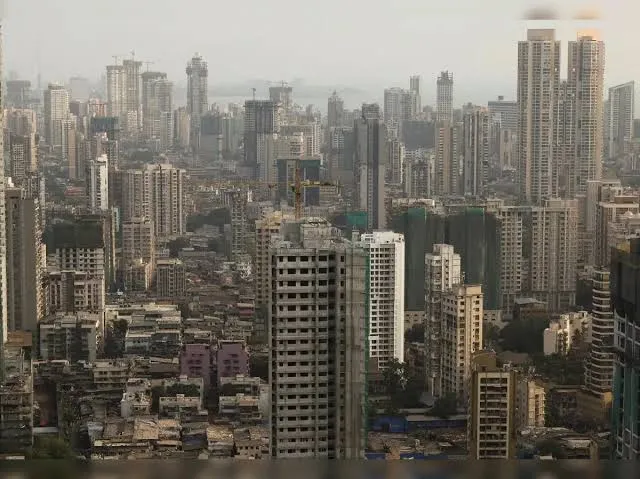
Managing property in Maharashtra while living abroad involves much more than collecting rent. NRI property owners need to manage tenant verification, Leave and License agreements, housing society requirements, rent collection, property taxes, regular inspections, maintenance, and emergency situations, all from another country. This guide explains the key challenges of property management for NRIs in Maharashtra and how professional property management helps protect both your property and your investment.
The Maharashtra Property Management Challenge for NRIs
Distance is only part of the problem.
Maharashtra remains one of the most popular destinations for NRI real estate investment. Mumbai, Pune, Thane, and Navi Mumbai are cities where many NRI families have invested their savings, inherited family property, or purchased homes for future retirement. But here is the hard truth: owning property in Maharashtra from abroad is not passive. It is work. And most NRIs are doing it without the right support. This blog breaks down the specific challenges of property management for NRIs in Maharashtra and why professional help is not a luxury but a practical necessity.
Maharashtra is not like other states when it comes to property. It has its own legal framework. Its own society governance structure. Its own municipal bodies with their own rules and deadlines. And its own rental market dynamics that vary city to city.
When you own a flat in a Mumbai housing society, you are not just a landlord. You are a society member. That means voting rights, maintenance obligations, society levy payments, and compliance responsibilities that do not pause because you are living overseas.
Most residential rentals in Maharashtra are executed through the Leave and License framework. The MCGM, PMC, TMC, and NMMC each have their own property tax systems. Tenant police verification is generally required under local police regulations and is strongly recommended as part of responsible tenancy management. Cooperative Housing Society (CHS) rules are enforced by the society’s managing committee, not by you.
Now imagine managing all of this from multiple time zones away. With no one on the ground. Without a property management company for NRIs in Maharashtra, most NRI owners end up playing catch-up. Paying fines. Missing renewals. Dealing with problems that could have been prevented months ago.
Finding the right tenant is stressful even when you live down the street. From overseas, it becomes genuinely difficult.
Each city in Maharashtra has its own tenant profile. Mumbai has high-turnover corporate and professional tenants, many on short-term assignments. Pune is driven by IT sector employees who move cities every two to three years. Thane and Navi Mumbai attract a mix of working professionals and families looking for more space at lower rents.
For an NRI landlord, every step of tenant onboarding requires physical presence or a trusted professional on the ground.
Background checks. Reference verification. Police verification. Agreement signing. Security deposit collection. Move-in inspection. These are not things a broker will do for you after you have paid them a commission. A broker’s job ends at the introduction. What happens after that is your problem.
And things can go wrong fast. Unverified tenants who seem fine on paper and are not. Informal arrangements made without a registered agreement because it was “quicker.” Security deposit disputes where there is no written record. Holdover tenants who overstay their tenure and refuse to vacate because they know the landlord is abroad and cannot easily take legal action.
Professional tenant handling for NRI landlords in Pune and Mumbai means someone on the ground who manages the full process. Sourcing, screening, verification, onboarding, and exit. Professionally documented. Every decision made with the NRI’s interests, not a quick commission, in mind.
Leave and License Agreement Execution and Compliance
This is where many NRIs get quietly hurt.
In Maharashtra, most residential rentals operate under the Leave and License framework. This is a specific legal arrangement and it should be e-registered through the Maharashtra IGR portal to provide stronger legal protection.
A notarised Leave and License agreement does not provide the same legal protection as a properly registered agreement and may create complications if disputes arise.
The e-registration process generally involves Aadhaar-based authentication or other approved verification methods. Many NRIs do not have an active Indian mobile number linked to their Aadhaar, or they have changed numbers over the years. Brokers sometimes work around this by skipping registration entirely or offering a notarised copy as a substitute.
This is not just a technicality. It is a serious legal exposure.
A professional property manager handles agreement drafting, gets the terms right (rent, deposit, tenure, notice period), coordinates the e-registration, and tracks renewal dates. When the agreement is coming up for renewal, you get a reminder. Not silence followed by an expired agreement and a tenant who knows it.
Rent Collection and Financial Compliance
Getting rent paid on time sounds simple. It is not.
When you are an NRI landlord in Maharashtra, your rent is generally credited to an NRO account. This matters for both banking compliance and tax filing purposes.
There is also TDS to account for. Under Section 195 of the Income Tax Act, rent paid to an NRI landlord is generally subject to TDS. In many cases, the effective deduction works out to around 31.2%, although the applicable rate may vary depending on the landlord’s tax position, DTAA benefits, or a lower deduction certificate.
Add to this the routine problem of delayed rent. A tenant who pays two weeks late every month. Or stops paying entirely, knowing that the landlord is overseas and legal action takes time to initiate.
Rent collection and compliance for NRI property in Maharashtra requires someone who follows up consistently, issues receipts, tracks deposit deductions, and flags any TDS irregularity before it becomes a tax problem. A professional property manager does this as a matter of routine. A casual arrangement almost never does.
Note: NRIs should work with a qualified CA to understand their specific income tax obligations on rental income from Indian property. The rules are nuanced and depend on their residential status and individual tax position.
Property Inspections and Maintenance Coordination
An uninspected property deteriorates. Slowly at first. Then faster.
A small seepage mark becomes water damage through the wall. A minor electrical fault becomes a hazard. Tenant wear and tear that went unchecked for two years becomes a full refurbishment cost when they finally vacate.
In Maharashtra, there is a seasonal dimension that makes this worse. Monsoon season runs from June to September. In Mumbai and coastal parts of Thane and Navi Mumbai, this means serious risk. Seepage through poorly waterproofed terraces. Drainage blockages that cause flooding. External wall cracks that let moisture in. If these issues are not caught before the monsoon hits, you are looking at significant repair costs after it passes.
A professional inspection means a physical visit, a photographic condition report, a maintenance assessment, and vendor coordination with your approval before any work is done. You see exactly what is happening at your property. You approve spends. You do not get a surprise bill for work you never sanctioned.
Quarterly inspections give you a consistent, documented record of your property’s condition and your tenant’s compliance with the agreement terms.
Society Management Issues for NRI Property Owners
This section matters more than most NRIs realise. And almost no one covers it.
When you own a flat in a Cooperative Housing Society (CHS) in Maharashtra, you have obligations that go well beyond paying the monthly maintenance charge.
Society levy payments. Participation in AGMs and special resolutions. NOC requirements whenever a new tenant moves in. Society transfer formalities when the property changes hands. Contributions to the sinking fund, repair fund, and any special assessments the committee decides to levy.
Many NRIs fall behind on all of this. Not because they are irresponsible. Because they simply are not receiving society communications. Letters are sent to the Indian address. The WhatsApp group is active but unmonitored. AGM notices come and go. Resolutions are passed. And the NRI finds out months later, usually when there is a problem.
Unpaid society dues accumulate interest. An NOC that was not obtained for a tenant move-in becomes a dispute with the managing committee. A special resolution that the NRI should have participated in was passed without their input.
A professional property manager assists with on-ground society coordination. They track levy payments, obtain NOCs before tenant move-in, coordinate with society office bearers where required, and keep you informed of any decisions that affect your flat. You stop being an absent member and start being a compliant one.
Police Verification of Tenants
This is something every NRI landlord should take seriously. And yet it is often overlooked.
Tenant police verification is generally required under applicable local police regulations in Maharashtra, and landlords are expected to ensure that it is completed for every new tenant.
The process involves submitting the tenant’s details and identity documents to the local police station, or through the Maharashtra Police online portal, where available.
The risk of skipping this step is real. If a tenant engages in any illegal activity on your premises, the absence of police verification can create legal complications for the landlord. As an NRI, this is a problem you do not want to be managing from overseas.
Brokers who operate without a formal management mandate frequently skip police verification. It takes time. It requires follow-up. And once they have collected their commission, there is little incentive to do it.
A professional property manager coordinates police verification as a standard part of tenant onboarding. It is not treated as an afterthought. It is built into the process.
Property Tax and Utility Management
Your property tax does not stop when you move abroad.
In Maharashtra, municipal property tax is assessed and billed annually by the MCGM in Mumbai, PMC in Pune, TMC in Thane, and NMMC in Navi Mumbai. It is the owner’s obligation to pay this, whether the property is occupied or vacant.
Utility connections should be properly maintained and bills paid on time, whether they remain in the owner’s name or the occupier’s name.
Many NRI-owned properties accumulate years of unpaid property tax and utility arrears for one simple reason: the bills were never received, and there was no one to pay them. By the time the NRI discovers the situation, there are penalties added, and sometimes a legal notice from the municipal body.
A professional property manager tracks all payment schedules, pays on behalf of the owner from an agreed maintenance fund, and maintains records. You receive digital confirmation of every payment. Nothing accumulates silently.
Preventing Property Encroachment and Misuse
This is the risk that most NRIs do not worry about until it happens to them.
Vacant and undermanaged property in Maharashtra is vulnerable. A neighbour who quietly extends a wall. Unauthorised occupation by caretakers or other third parties. An extended family member who was given temporary access and has not left. A tenant who sublets to a third party without permission.
The legal risk is real. Under certain circumstances, long-term uninterrupted adverse possession may give rise to legal claims. However, adverse possession is highly fact-specific and difficult to establish in court.
Recovering from encroachment without a registered agreement is enormously difficult. Eviction proceedings in India are not fast. And without documentation of regular oversight, the owner’s legal position may become weaker over time.
A professional property manager maintains a visible, accountable presence at your property. Regular visits. Documented inspection records. Immediate flagging of any encroachment or unauthorised use. This is how you prevent the problem, rather than deal with it in court.
Emergency Handling When the Owner Is Overseas
Imagine this. It is 2am in New York. Your tenant in Andheri calls. There is a pipe burst. Water is flooding the flat. They need a plumber right now.
What do you do?
If you do not have a professional property manager, you are scrambling. Calling relatives. Trying to find a vendor’s number. Hoping someone can get there in the next hour. Meanwhile, water is damaging the floor, the ceiling below, and your relationship with the tenant.
Emergencies do not announce themselves in advance. And they do not respect time zones.
Emergency property management for NRIs overseas in Maharashtra means having a professional on the ground with the authority and the vendor network to coordinate a prompt response. A pipe burst gets immediate attention. A monsoon seepage during the rains gets inspected and reported before it becomes a structural problem. A tenant lockout gets resolved without the landlord being pulled out of a meeting in Dubai.
You get a notification. A report. A photo. And the problem is resolved.
This is not just convenience. For an NRI managing their most significant financial asset from thousands of miles away, this kind of operational backup is peace of mind in the most literal sense.
Conclusion
Owning property in Maharashtra as an NRI is not a passive investment. It is an active responsibility. The legal framework, the society governance structures, the urban rental markets, and the monsoon-driven maintenance cycle all demand on-ground attention that no casual arrangement can reliably provide.
The challenges are real. Unverified tenants. Improperly registered agreements. Missed society dues. Unpaid property tax. Maintenance that goes unaddressed for months. These are not worst-case scenarios. They are common issues when NRI-owned property in Maharashtra is managed without professional support.
The good news is that every single challenge covered in this blog has a clear, practical solution. Tenant verification. Leave and License e-registration. Rent collection and TDS coordination. Regular inspections. Society coordination. Property tax management. Police verification. Encroachment prevention. Emergency response.
Housewise manages NRI-owned properties across Maharashtra’s major cities. Mumbai, Pune, Thane, Navi Mumbai, and beyond. Whether your property is vacant, rented, or preparing for sale, Housewise provides end-to-end property management services, from tenant onboarding and quarterly inspections to society coordination, maintenance, and ongoing support. So you can own property in Maharashtra with genuine confidence, no matter where in the world you are.
Frequently Asked Questions
Why do NRIs with property in Maharashtra need professional property management?
Maharashtra’s property market comes with specific legal, regulatory, and society-related obligations that are difficult to manage from abroad. Leave and License compliance, CHS society governance, municipal property tax deadlines, tenant police verification, and monsoon maintenance cycles all require active, on-ground management. A professional property manager helps handle these responsibilities on the NRI’s behalf while keeping the owner informed.
How can NRIs manage their Maharashtra property from abroad?
By appointing a professional property management company with an established presence in their specific city. The right manager will handle tenant sourcing and verification, Leave and License e-registration, rent collection and TDS coordination, society coordination, utility and property tax payments, inspections, and maintenance. The NRI stays informed digitally and does not need to visit India for routine property matters.
What are the biggest challenges NRIs face managing property in Mumbai and Pune?
The most common challenges include finding and verifying reliable tenants, executing properly registered agreements, managing housing society obligations, ensuring timely rent collection with correct TDS compliance, coordinating maintenance, and keeping up with property tax and utility payments. All from a significant time zone difference, often without any trusted local contact.
Is police verification of tenants mandatory for NRI landlords in Maharashtra?
Tenant police verification is generally required under local police regulations in Maharashtra, and landlords are expected to ensure it is completed for every new tenant. A professional property manager typically includes police verification as a standard part of tenant onboarding.
What happens if an NRI-owned property in Maharashtra is left vacant and unmanaged?
Vacant properties can accumulate unpaid society dues, property tax arrears, and utility penalties. They may also become vulnerable to encroachment and maintenance deterioration, especially during the monsoon season. Regular professional oversight helps reduce these risks and keeps the property in good condition.
How does a property management company handle society issues for NRI property owners?
The property manager assists with society coordination by tracking society dues, obtaining NOCs for tenant move-ins, monitoring society communications, coordinating with the managing committee where required, and keeping the NRI informed of decisions that affect their property.


0 Comments