
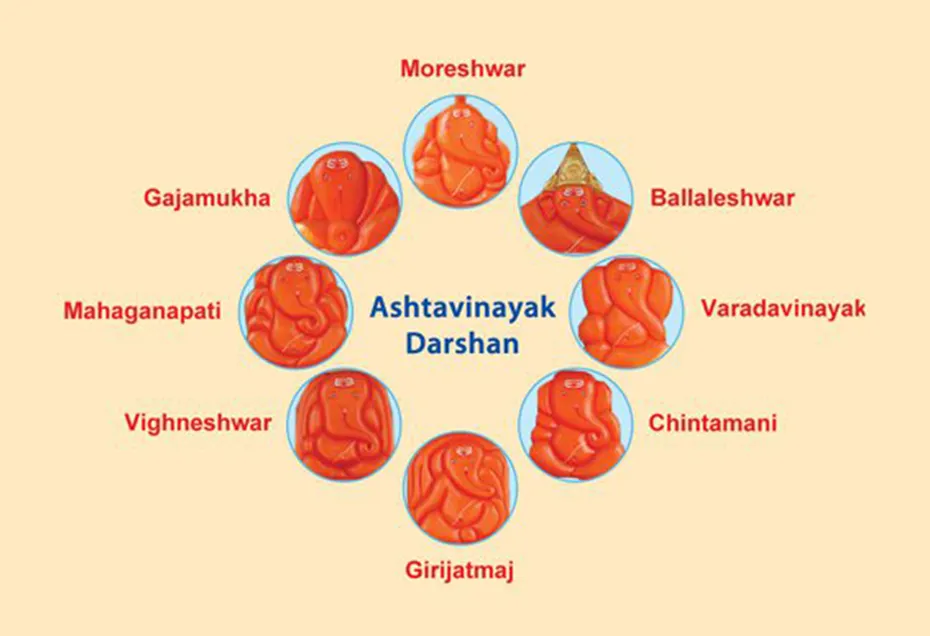
There is something deeply emotional about visiting the eight sacred Ganesh temples of Maharashtra. The Ashtavinayak Yatra is not just a pilgrimage. It is a homecoming. For NRIs who have been away for months or years, completing this yatra during a trip back to India feels like touching something real, something rooted.
The challenge? Planning it from abroad is genuinely tricky. You have limited days, you are coordinating across time zones, and you are trying to figure out which ashtavinayak tour from pune actually works. MSRTC or private package? Two days or three? Start from Morgaon or Ranjangaon?
This guide answers all of that. No fluff. Just a practical, step-by-step plan so you can walk into this yatra prepared and walk out of it at peace.
What Is Ashtavinayak Yatra?
The word Ashtavinayak literally means eight Ganeshas. It refers to a sacred circuit of eight ancient Ganesh temples spread across Maharashtra. Each temple has its own legend, its own idol, and its own spiritual energy.
What makes the yatra special is that each of the eight Ganeshas is considered swayambhu — self-manifested, not sculpted by human hands. That belief alone gives the pilgrimage an unmistakable weight.
Here are the eight temples:
- Moreshwar (Morgaon) — The first and most important stop in the traditional order
- Siddhivinayak (Siddhatek)
- Ballaleshwar (Pali)
- Varadavinayak (Mahad)
- Chintamani (Theur)
- Girijatmaj (Lenyadri)
- Vighnahar (Ozar)
- Mahaganapati (Ranjangaon)
The good news for NRIs? All eight temples are within driving distance of Pune. Most are within 50 to 120 kilometres. That makes Pune the perfect base for planning this trip.
How Many Days Do You Need for Ashtavinayak Darshan?
This is the question everyone asks first. The short answer: two days is possible, three days is recommended.
Here is what each option looks like in practice.
2-Day Plan: Possible But Demanding
On Day 1, you cover the Pune-nearby cluster: Moreshwar (Morgaon), Chintamani (Theur), Ballaleshwar (Pali), and Varadavinayak (Mahad). On Day 2, you head north: Siddhivinayak (Siddhatek), Girijatmaj (Lenyadri), Vighnahar (Ozar), and wrap up at Mahaganapati (Ranjangaon).
It is doable. But you will be waking up before dawn, darshans will be rushed, and you will end the second night exhausted. Think of it as a sprint, not a yatra.
3-Day Plan: Comfortable and Meaningful
This is what most experienced pilgrims recommend. Spread the eight temples across three mornings. You get proper darshan time at each temple, real rest between days, and space to actually absorb the experience.
Day 1: Morgaon, Siddhatek, Pali. Day 2: Mahad, Theur, Lenyadri. Day 3: Ozar, Ranjangaon.
For NRIs travelling with elderly family members or young children, the 3-day plan is not optional — it is essential.
Ashtavinayak Tour Options from Pune
There are three main ways to do this yatra from Pune. Each suits a different kind of traveller. Here is a clear breakdown.
MSRTC Bus Packages
MSRTC — Maharashtra State Road Transport Corporation — runs organised Ashtavinayak tours from Pune. These are budget-friendly, government-operated, and surprisingly well-structured.
Departure is typically from Pune Station or Swargate Bus Depot. The packages cover all eight temples in 2 to 3 days and include bus transport between all temple stops. Pricing is very affordable compared to private options.
For ashtavinayak tour from pune msrtc timings, buses generally depart early morning — around 5:30 to 6:00 AM. Always check the official MSRTC website before your travel date as schedules and pricing are updated seasonally.
The best ashtavinayak tour from pune msrtc packages also attract fellow pilgrims, which adds a community feel to the journey that many NRIs find unexpectedly moving.
The trade-off is flexibility. These are buses with fixed itineraries. If you prefer your own pace or a private vehicle, MSRTC may feel too rigid.
Private Tour Packages — Kesari Travels and Others
For NRIs who want a guided, hassle-free experience, private tour operators are a strong choice.
What you get with private packages: AC coaches or SUVs, hotel accommodation, a dedicated tour guide, and meal arrangements at some stops.
The ashtavinayak tour package price from pune for private operators typically ranges from Rs 3,500 to Rs 8,000 per person depending on inclusions and accommodation tier. Always confirm what is included — some packages list accommodation but may mean dormitory-style dharamshalas rather than hotels.
The key advantage for NRIs planning from abroad: private packages can be booked online. You can confirm your spot and pay without being in India. That is genuinely useful when you are coordinating a trip from Dubai or Toronto.
Self-Drive or Hired Cab
This is the most flexible option. You book a cab in Pune, split the cost across your group, and go at your own pace.
For families, this is often the best choice. You stop when you want. You spend more time at temples that matter more to you. If someone is tired, you adjust.
A hired cab for the full circuit — covering roughly 450 to 500 km — costs approximately Rs 6,000 to Rs 10,000 depending on vehicle type and trip duration. Platforms like Ola Outstation allow you to book from abroad with a valid email or number.
One note: the road to Siddhatek involves rural stretches. Do not rely on memory. Use Google Maps and ask your driver for local guidance.
Ashtavinayak Tour from Ahmedabad
Some NRIs land in Ahmedabad before making their way to Pune for the yatra. A few tour operators cater specifically to the ashtavinayak tour package from ahmedabad route.
The most common approach is an overnight train from Ahmedabad to Pune. The Duronto Express and the Ahmedabad-Pune Superfast are popular options — journey time is roughly 11 to 13 hours overnight, so you arrive rested. Flights take under 90 minutes and are available daily.
Some operators in Ahmedabad — particularly in Maninagar and Vastrapur — run group packages that include the Ahmedabad-Pune journey plus the full temple circuit. Call ahead to confirm availability. Prices and departure dates change seasonally.
Recommended Darshan Order and Route
There is no strict religious rule about the order. You will not commit a religious error by changing the sequence. But geographically, certain routes are far more efficient and save you significant driving time.
The most commonly followed and geographically sensible order starting from Pune:
- Moreshwar — Morgaon (62 km from Pune)
- Siddhivinayak — Siddhatek (101 km from Pune)
- Ballaleshwar — Pali (110 km from Pune)
- Varadavinayak — Mahad (80 km from Pali)
- Chintamani — Theur (25 km from Pune)
- Girijatmaj — Lenyadri (90 km from Pune, near Junnar)
- Vighnahar — Ozar (85 km from Pune, near Junnar)
- Mahaganapati — Ranjangaon (50 km from Pune, near Shirur)
Temples 6 and 7 — Lenyadri and Ozar — are close to each other near Junnar, so club them on the same day. Ranjangaon works well as the final stop on the way back to Pune.
Think of the route like a rough loop. Start south toward Morgaon, swing east toward Siddhatek, head west to Pali and Mahad, then return through the Junnar belt and finish at Ranjangaon.
Where to Stay During Ashtavinayak Yatra
Accommodation depends on your comfort preference and budget. There are three main tiers.
Temple Dharamshalas: Most of the eight temples have basic dharamshalas run by the temple trust. Functional and clean, but basic. Expect shared bathrooms and minimal amenities. Costs are very low or donation-based. Ideal for pilgrims on a strict budget or those who want to stay close to the temple.
Budget Hotels in Nearby Towns: Towns like Morgaon, Pali, and Junnar have small hotels with clean rooms and attached bathrooms. Pricing is typically Rs 800 to Rs 1,500 per night. Book these in advance during peak season — October to February — as rooms fill up fast.
Mid-Range Hotels in Pune: If you prefer to use Pune as your base and do day trips, Pune has excellent hotel options across all price points. This is the most comfortable approach for NRIs who want predictable accommodation between temple days.
Most private tour packages include accommodation. If yours does, confirm whether it is a hotel or dharmshala stay before booking.
How Much Does Ashtavinayak Yatra Cost?
Here is an honest breakdown of what the full yatra costs. Treat these as planning estimates — prices vary by season and operator.
| Expense | Budget | Mid-Range | Package Tour |
|---|---|---|---|
| Transport (full circuit) | Rs 1,500 (MSRTC) | Rs 6,000-8,000 (cab) | Included |
| Accommodation (2 nights) | Rs 500-800 | Rs 2,000-4,000 | Included |
| Food (2-3 days) | Rs 500-800 | Rs 1,500-2,500 | Partial/Included |
| Darshan & Puja fees | Free (general) | Rs 500-1,000 (special puja) | Rs 500-1,000 |
| Total per person (approx) | Rs 2,500-3,600 | Rs 10,000-15,500 | Rs 3,500-8,000 |
General darshan at all eight temples is completely free. Charges apply only for special pujas, abhishek, or flower offerings. Verify current rates directly at the temple trust offices before your visit.
Conclusion
Completing Ashtavinayak Yatra is one of the most fulfilling things an NRI can do during a trip back to India. It is a few days of deep connection — to faith, to family, to the land you grew up in.
With the right planning, it is very doable. Choose your tour option based on your budget and comfort level. Plan for 2 to 3 days. Book accommodation and transport in advance, especially if you are visiting between October and February when footfall is highest. Check MSRTC and private operator websites from abroad — most allow international bookings.
The temples are waiting. The roads are manageable. And the experience? It will stay with you long after you return to wherever you call home now.
And if you own property in Pune or Maharashtra and want it looked after while you travel or live abroad, Housewise offers end-to-end property management so your home is always in good hands.
Frequently Asked Questions
How many days are required for Ashtavinayak Darshan?
Most devotees complete the yatra in 2 to 3 days. A 3-day plan is more comfortable and allows time for proper darshan at each temple without rushing. If you have the time, always go with 3 days.
Can we visit Ashtavinayak in any order?
There is no strict religious rule about the order of visiting the eight temples. However, most travellers follow a geographically efficient route starting from Pune to minimise travel time and fatigue.
Where to stay during Ashtavinayak Yatra?
Stay options include temple dharamshalas near major temples, budget hotels in nearby towns, and mid-range hotels in Pune for those doing a day-trip-based plan. Tour packages often include accommodation — confirm the type before booking.
Can we complete Ashtavinayak in 2 days?
Yes, it is possible if you start early and follow an optimised route. However, it can be tiring. A 3-day plan is recommended for a more relaxed and meaningful experience.
How much does it cost to go to Ashtavinayak Yatra?
The cost depends on your mode of travel and stay preferences. MSRTC tours are the most budget-friendly option, while private tours with accommodation can range higher. Darshan at the temples is generally free, though special pujas are chargeable.
Which is the most powerful temple in Ashtavinayak?
All eight temples hold equal religious significance. However, Moreshwar temple in Morgaon is traditionally considered the first and most important stop in the yatra.
Is online booking available for Ashtavinayak temples?
Most Ashtavinayak temples do not require advance booking for general darshan. Special pujas and abhishek may need to be arranged in advance — check each temple’s official contact for current details.
Also read: How NRIs Can Visit Dagdusheth Ganpati


0 Comments