
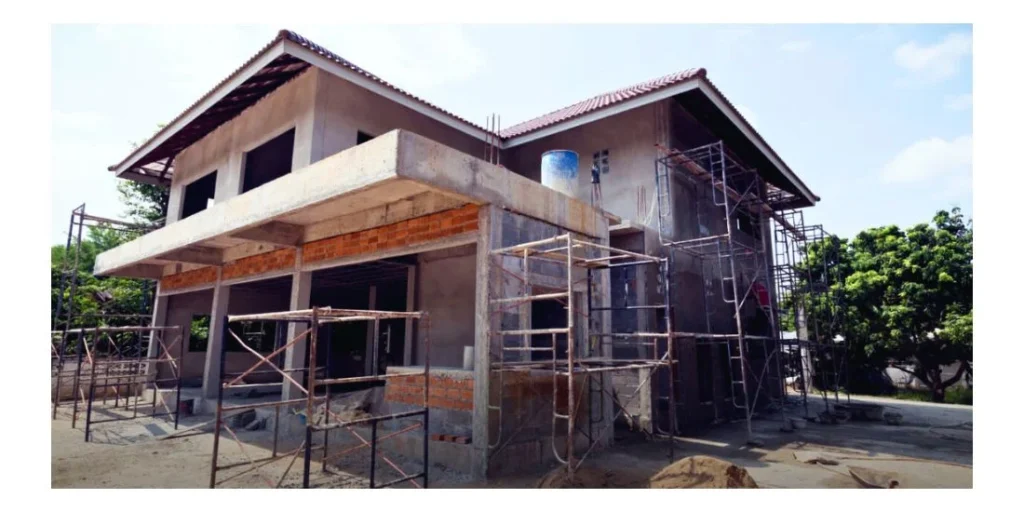
Building a home in India is a dream for millions. It is likely the single biggest investment you will ever make.
But here is the thing. Most first-time homeowners have no idea what actually happens after the contractor digs the first hole.
I remember watching my uncle build his house in Faridabad. He would go to the site every morning before work. He looked confused most of the time. The masons were speaking in rapid-fire Hindi about rods and ratios. He just nodded and hoped for the best.
You don’t have to be that person.
Understanding the house construction step by step process helps you in two big ways. First, you save money because you know what you are paying for. Second, you avoid delays. When you know what comes next, you can prepare for it.
This guide breaks down the building construction process step by step. From an empty plot to the day you turn the key in the lock. Let us walk through it together.
Introduction: The Road Ahead
Think of building a house like cooking a massive meal for fifty people. You cannot just start cooking. You need a menu. You need ingredients. You need to know which dish goes in the oven first.
House construction is the same.
The stages of house construction follow a strict order. You cannot plaster before you lay bricks. You cannot do flooring before the roof is done. It is a sequence. And if you skip a step, you pay for it later.
This guide covers every stage. We start with paperwork and end with housewarming. Let us begin.
PRE-CONSTRUCTION PHASE
This is the boring part. Most people want to skip it. They want to see walls going up.
But here is the truth. If you get this phase wrong, the rest of the project is built on a lie. Literally.
Step 1: Planning & Budgeting
Sit down with a notebook. Write down what you actually need.
How many bedrooms? Do you need a pooja room? A home office? Parking for two cars or one?
Be realistic. I once met a family who planned a four-storey home for a 30-by-40 plot. It looked like a pencil standing upright. It was impractical and expensive.
Once you have your requirements, make a budget. Then add 20 percent to it. I am serious.
Construction always costs more than you think. Material prices go up. Labour rates change. You might want a better tile halfway through. This extra money is your contingency reserve. It keeps the project alive when surprises happen.
This is the foundation of your new house construction plan. Without it, you are building on sand.
Step 2: Land Selection & Soil Testing
If you already own land, great. If not, choose carefully.
Look for a plot that is higher than the road. Water should not collect here during rain. Check if all basic amenities like electricity and water are nearby.
Now here is a step almost everyone skips. Soil testing.
You might think dirt is just dirt. It is not.
The soil under your house determines how deep your foundation must go. Some soil is hard and rocky. Some is soft and clayey. If you build a heavy structure on soft soil without proper depth, your house will sink. Or crack.
A soil test costs a few thousand rupees. It can save you lakhs in repairs later.
The test tells your engineer the bearing capacity of the ground. This decides how to build house foundation step by step safely.
Step 3: Architectural Design & Drawings
This is where your dream becomes a drawing.
You need an architect or a civil engineer. Do not rely on the contractor’s “mental map.” I have seen rooms built without windows because the contractor “forgot.”
Your drawing package should include:
- Floor Plan: Shows room layout, doors, windows.
- Elevation: Shows how the house looks from the outside.
- Structural Drawings: Shows beam and column positions. This is for the engineer.
- Electrical and Plumbing Layouts: Shows where switches, fans, and pipes go.
These drawings are the rulebook for your residential building construction. The labourers on site will follow these. If something goes wrong, you point to the drawing.
Step 4: Approvals & Permissions
India runs on paperwork. House construction runs on even more paperwork.
You need to get your building plan sanctioned by the local municipal corporation or the development authority. This is not optional.
If you build without approval, the government can fine you. In extreme cases, they can demolish your construction. It happens.
Visit the local body with your drawings. Pay the fees. Get the stamp.
You also need separate approvals for electricity connection and water supply. Start this early. Bureaucracy moves slowly.
This is a critical part of the house construction steps in India. Ignore it at your own risk.
SITE PREPARATION & FOUNDATION
Now the real work begins. You have paper. Now you need dirt.
Step 5: Site Clearing & Layout Marking
The plot is empty. Maybe there is some garbage. Maybe some wild grass.
First, clear everything. The site should be flat and clean.
Then comes the marking. The workers take your floor plan and transfer it to the ground. They use string and lime powder. They mark where every wall will stand.
This is called the grid layout. It is exciting. For the first time, you see the size of your rooms in real life. You walk through invisible walls. You realize the hall is smaller than you thought.
Adjust now if you need to. Once digging starts, changing the layout is expensive.
Step 6: Excavation for Foundation
Now the earth moves.
JCB machines dig trenches where the foundation will go. The depth depends on the soil test report. In most Indian cities, it goes about 5 to 10 feet deep.
Watching the excavation is dramatic. Deep pits appear. The site looks like a war zone. Do not worry. This is normal.
The trenches follow the layout lines. They will soon hold the bones of your house.
Step 7: PCC (Plain Cement Concrete) Work
Before you put steel, you need a clean base.
A layer of lean concrete is poured into the trenches. This is called PCC. It is a simple mix of cement, sand, and aggregate. No steel.
Think of it as a mattress. It provides a hard, level surface for the real foundation to sit on.
The PCC layer is usually 4 to 6 inches thick. It dries and hardens in a day. Now the trench is ready for the heavy stuff.
Step 8: Footing & Foundation RCC
This is the first time steel enters your house.
Steel bars, called reinforcement, are placed inside the trenches in a specific pattern. The engineer’s drawing tells the workers exactly how many bars and at what spacing.
Then concrete is poured over this steel. This mixture of cement, sand, aggregate, and water binds with the steel to create something incredibly strong. It is called Reinforced Cement Concrete or RCC.
This is the actual foundation. It transfers the weight of your entire house to the ground.
After pouring, the concrete needs water. This is called curing. For at least 7 days, the foundation is kept wet. It sounds strange, but concrete gets stronger when it cures slowly. If it dries too fast, it cracks.
This step is the real meaning of house building construction. Everything after this sits on top of this RCC.
Step 9: Plinth Beam & Backfilling
Once the foundation is cured, you build the plinth beam. It sits at ground level. It connects all the columns and distributes the load evenly.
After the beam is done, the area inside the foundation is filled back with soil. This is backfilling. The soil is compacted tightly so it does not sink later.
Now your house is ready to rise above the ground.
SUPERSTRUCTURE WORK
The foundation is done. Now the house goes up.
Step 10: Column & Beam Construction
Steel reinforcement now extends upward. These are your columns. They are like the spine of the house.
Workers tie steel bars vertically. Wooden planks, called shuttering, are placed around them to create a mould. Concrete is poured into this mould.
Once the concrete sets, the shuttering is removed. You see a grey concrete column.
These columns support the entire structure. Beams connect them horizontally. Together, they create the RCC frame.
If you look at an under-construction building, you see this grey skeleton first. It is strong. It holds everything together.
Step 11: Brickwork / Blockwork
Now the skeleton gets skin.
Bricks or concrete blocks fill the spaces between columns. This is the wall.
The workers use a mortar mix of cement and sand. They lay brick by brick. They check level constantly. A wall that leans today is a problem forever.
In most Indian homes, the outer walls are 9 inches thick. Inner walls are 4.5 inches thick. This keeps the house strong but saves space inside.
This is the stage where the house starts looking like a house. You can walk through door openings. You can stand in a room and imagine your sofa there.
Step 12: Lintel & Roof Slab Casting
Above every door and window, there is a beam. This is the lintel. It carries the weight of the wall above the opening.
After the walls reach the top of the doors, the lintel is cast. Then the brickwork continues upward until it reaches the roof level.
Now comes the biggest pour of all. The roof slab.
A maze of steel bars is laid across the entire floor. It looks like a giant metal net. Then concrete is poured over it. This is a non-stop operation. Once pouring starts, it cannot stop until the whole slab is done.
The slab is the ceiling of your current floor and the floor of the next floor. Or the terrace if this is the top.
After pouring, the slab must cure for at least 14 days. Workers keep it wet. Sometimes they cover it with wet gunny bags.
This is one of the most critical building stages. A badly cast slab can leak or crack.
Step 13: Staircase Construction
If your house has more than one floor, you need stairs.
The staircase is usually cast along with the slab. It is a complex structure. The steps, called treads, and the vertical parts, called risers, are all cast in concrete.
Safety is key here. The dimensions must be comfortable. Too steep, and it feels like climbing a mountain. Too shallow, and you trip.
SERVICES INSTALLATION
The structure is up. Now we hide things inside the walls.
Step 14: Electrical Conduit & Wiring
Before plastering, the electrician comes.
PVC pipes, called conduits, are laid inside the walls and slabs. These will carry the wires later. Switch boxes are placed at the right heights.
This is concealed wiring. You cannot see the wires. They are inside the walls. It looks clean and modern.
Plan your switch points carefully. Walk through every room. Imagine where you want lamps, fans, and phone chargers. Once the plaster is done, moving a switch is a messy job.
Step 15: Plumbing & Drainage
Water is essential. So are toilets.
Plumbers lay pipes for water supply. Hot and cold water lines go to bathrooms and the kitchen. Drainage pipes for waste water are laid with a slope. Water must flow out, not sit in the pipe.
Overhead tank connections are made. If you have a sump, the pump connection is installed.
Check everything before plaster covers it. A leaking pipe inside a wall is a nightmare to fix.
Step 16: HVAC & Other Utilities
If you are installing air conditioning, central or split, this is the time to run the copper tubing and drainage pipes.
Solar panels? Inverter wiring? Do it now.
Once the walls are plastered, adding new pipes means breaking walls. Avoid that pain.
FINISHING WORK
Now the house starts looking beautiful.
Step 17: Internal & External Plastering
The rough brick walls get a smooth coat of plaster.
A mixture of cement and sand is applied to the walls. It covers the bricks and creates a flat surface. Outside plaster is usually thicker. It protects the house from rain.
After plastering, the walls need curing. At least 7 days.
Now the rooms look clean. You can really see the space.
Step 18: Flooring Installation
This is a big milestone. The floors change from rough concrete to shiny tiles or marble.
Workers start from one corner. They lay tiles with precision. They use a level constantly. No one wants a tilted floor.
You can choose ceramic tiles, vitrified tiles, granite, marble, or wood. Each has a different cost and look.
The flooring changes the entire feel of the house. It goes from a construction site to a home.
Step 19: Doors, Windows & Frames
The openings in the walls now get frames.
Wooden frames are common. UPVC is becoming popular too. It is termite-proof and low-maintenance.
After the frames, the shutters (the moving part of the door) are hung. Windows are fitted with glass and mesh.
Now the house is secure. No one can walk in easily.
Step 20: Painting & Finishing
Paint brings life.
First, a primer is applied. It helps the paint stick. Then putty is used to fill small holes and cracks. The wall is sanded smooth. Finally, the paint goes on.
Two coats are standard. Three if you want a richer look.
The colours you chose months ago finally appear. It is emotional. I have seen homeowners cry at this stage. The house becomes theirs.
Step 21: Kitchen & Bathroom Installation
Now the specialists come in.
The modular kitchen is installed. Cabinets go up. The countertop is fixed. The sink is connected.
In bathrooms, sanitary ware is fitted. Commodes, basins, taps, and showers. The overhead shower or the hand shower, whichever you chose.
Mirrors and accessories go up.
These rooms become functional. You can almost move in.
FINAL STAGE
Almost done. Just the outside and the final checks remain.
Step 22: Exterior Work
The inside is beautiful. Now the outside must match.
Compound walls are built or completed. The driveway is paved. If you have a garden, landscaping happens now.
The outer walls get their final paint. The house looks finished from the street.
Step 23: Final Inspection & Handover
Before you move in, walk through every room with a notebook.
This is the snag list. You note down everything wrong. A scratched tile. A door that does not close properly. A tap that drips.
Give this list to your contractor. They fix it.
Once everything is perfect, you get the occupancy certificate from the local authority if required. It says the house is safe to live in.
Then you get the keys.
Construction Process Flow Chart
Here is the entire sequence in simple terms:
Planning → Approvals → Excavation → Foundation → Columns & Beams → Brickwork → Slab → Electrical & Plumbing → Plaster → Flooring → Doors & Windows → Painting → Kitchen & Bathrooms → Exterior Work → Handover
Print this. Stick it on your fridge. It keeps you on track.
Timeline of House Construction in India
How long does it take?
For a 1000 sq ft house, expect 8 to 10 months. For a 1500 sq ft house, 10 to 12 months. For a 2000 sq ft house, 12 to 15 months.
Delays happen. Rain stops work. Labour goes home for festivals. Material arrives late. Add 2 months to whatever the contractor tells you.
Cost Impact by Stage
Where does your money go?
- Foundation: 10 to 15 percent
- Structure (Columns, Slab, Brickwork): 25 to 30 percent
- Finishing (Plaster, Flooring, Painting): 35 to 40 percent
- Services (Electrical, Plumbing): 10 to 15 percent
Finishing costs the most. It is also where you can save or splurge. Marble costs more than tiles. Wood costs more than laminate. Choose wisely.
Common Mistakes in House Construction
Learn from others’ mistakes.
- No soil testing: Your foundation might fail.
- Poor curing: Concrete cracks.
- Cheap materials: You pay more in repairs later.
- No supervision: Workers take shortcuts.
- Changing designs mid-way: Costs explode.
Do not be the person who makes these errors.
Hiring a Contractor vs Self-Managed
You have two choices.
Labour Contract: You buy all materials. You pay workers daily. You supervise. You save money but you work hard.
Turnkey Contract: The contractor does everything. You pay a fixed price. You relax but you pay more.
Choose based on your time and energy. If you have a job, turnkey is easier. If you are retired or have family help, managing yourself saves lakhs.
Conclusion
Building a house is a long road. There are days of dust and noise. There are days when nothing seems to move.
But then one day, you stand in your living room. The light comes through the windows. The paint is exactly the colour you wanted. The floor shines.
You realize it was worth it.
Understanding the step-by-step house construction process in India is your best tool. It keeps you calm when things go slow. It keeps you smart when the contractor suggests changes. It keeps your money safe.
Follow the steps. Supervise what you can. Ask questions when you do not understand.
Your home is waiting. Go build it.
Frequently Asked Questions
What is the first step in building a house in India?
The very first step is planning and budgeting. Before you buy land or call a contractor, sit down and list your requirements. How many bedrooms? What is your total budget? Add a 20 percent contingency for surprises. This plan guides every decision after this.
How long does it take to construct a house in India?
For a typical 1500 to 1800 sq ft home, expect about 10 to 12 months from digging to handover. This timeline depends on weather, material availability, and labor. Monsoon season often causes delays, so factor in an extra month or two to be safe.
Do I really need soil testing before construction?
Yes, absolutely. Soil testing tells you the ground’s strength. It decides how deep your foundation must go. Building on weak soil without a test can lead to cracks or sinking later. It costs a few thousand rupees but saves you from major structural problems.
What approvals do I need from the government?
You need your building plan sanctioned by the local municipal corporation or development authority. This confirms your design follows local rules. You also need separate approvals for electricity and water connections. Starting this early helps avoid legal trouble later.
What is the difference between a labour contract and a turnkey contract?
In a labour contract, you buy all materials and hire workers directly. You save money but must supervise daily. In a turnkey contract, the contractor handles everything for a fixed price. You pay more but relax while they manage the site.
How much does it cost to build a house per square foot in India?
Basic construction with standard materials costs around ₹1,800 to ₹2,200 per square foot. This includes structure, plaster, and basic flooring. If you want branded fittings, marble flooring, or modular kitchens, the cost can go up to ₹2,800 or more per square foot.
What is curing and why is it important?
Curing means keeping freshly poured concrete wet so it dries slowly. This slow drying makes the concrete stronger and prevents cracks. Workers usually sprinkle water or cover the surface with wet gunny bags. It should continue for at least 7 to 14 days after pouring.
Can I make changes to the design during construction?
Technically yes, but it is expensive and causes delays. Changing a wall after brickwork means breaking and rebuilding. Changing plumbing after plaster means breaking walls. Finalize your drawings before construction starts. If you must change something, do it before the relevant stage begins.
When should I plan the electrical switch points?
Plan your switch points before plastering starts. Walk through every room and imagine your furniture. Mark where you want lamps, fans, and phone chargers. The electrician lays pipes inside the walls at this stage. Moving a switch after plastering is a messy job.
What is a snag list and why do I need one?
A snag list is a notebook where you write down every small defect before moving in. A scratched tile. A door that does not close properly. A leaking tap. Give this list to your contractor. They fix everything on it before the final handover.


0 Comments