
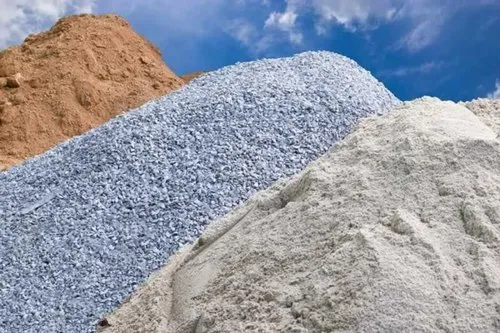
Walk past any construction site. You will see a big pile of sand. Brown. Grey. Dusty. It does not look special. But here is the truth. That pile of sand determines whether your walls will crack. Whether your plaster will fall off. Whether your concrete will hold strong for fifty years or start weakening in ten.
Sand is not just sand. In the old days, builders used river sand for everything. Columns. Slabs. Plaster. Flooring. It worked. But rivers cannot keep up with our construction needs. We dug too much. Rivers went dry. The government stepped in.
Enter M sand and P sand.
If you are building a home, buying material for a site, or just trying to understand contractor estimates, this guide is for you. We will break down the difference between M sand and P sand. No confusion. No vague advice. Just clear, practical knowledge you can use.
Let us start with the basics.
What is M Sand?
M sand stands for Manufactured Sand.
It is not dug from a riverbed. It is not scooped from a pit. It is made in a factory. Here is how it works. Big rocks. Granite, usually. They go into a crushing machine. The machine chews them up. It spits out small, angular pieces. These pieces are then screened, washed, and graded.
What comes out is M sand.
Think of it like this. River sand is nature’s product. M sand is factory-made. Both do the job. But M sand is consistent. Every batch is the same size, same shape, same quality. River sand changes depending on where you dig it.
M sand full form: Manufactured Sand
What is M sand used for? Concrete. RCC. Columns. Beams. Slabs. Foundations. Anywhere you need strength.
What is P Sand?
P sand stands for Plastering Sand.
It is also manufactured. But it is made differently.
Remember the M sand manufacturing process? After crushing the rocks, the material passes through screens. The coarse particles are separated. They become M sand. The finer particles that pass through the last screen? That is the raw material for P sand.
This sand is further processed. It is washed to remove dust. It is graded to ensure consistent fineness.
P sand full form: Plastering Sand
What is P sand used for? Wall plaster. Ceiling plaster. Smooth finishes. Decorative textures. Anywhere you need a smooth, even surface.
Here is an easy way to remember. M is for Mix. P is for Plaster.
M Sand vs P Sand: The Main Difference
Let us put them side by side. This is the comparison you came here for.
| Parameter | M Sand | P Sand |
|---|---|---|
| Full form | Manufactured Sand | Plastering Sand |
| Primary use | Concrete, RCC, structural work | Wall plaster, ceiling plaster, finishing |
| Particle size | 2.36 mm to 4.75 mm | 150 microns to 2.36 mm |
| Texture | Coarse, angular | Fine, smooth |
| Strength | High compressive strength | Moderate, not for load bearing |
| Finish | Rough surface | Smooth, even finish |
| Shrinkage cracks | Less in concrete | Less in plaster if graded properly |
| Cost | ₹40–₹65 per cubic foot | ₹35–₹55 per cubic foot |
| IS Code | IS 383:2016 | IS 1542:1992 |
The simple rule. Use M sand for anything that holds weight. Columns. Beams. Slabs. Footings. Use P sand for anything that needs a smooth face. Internal walls. External plaster. Ceilings.
Do not mix them up. Using P sand in concrete gives you weak structures. Using M sand in plaster gives you rough, sandpaper-like walls that soak up paint.
I learned this the hard way. A contractor once used M sand for internal plaster to save money. The wall felt like a rubbing stone. We had to apply an extra coat of putty just to make it smooth. Cost more than using the right sand from the start.
Manufacturing Process: How M Sand and P Sand Are Made
M sand manufacturing process:
- Crushing: Large rocks, usually granite or basalt, are fed into crushers. Jaw crushers for primary crushing. Cone crushers or VSI (Vertical Shaft Impactor) for secondary crushing.
- Screening: The crushed material passes through vibrating screens. Multiple decks. Different sieve sizes. The material is separated by particle size.
- Washing: Water jets spray the sand. This removes dust, silt, and micro-fines. Clean sand has better bonding with cement.
- Grading: The washed sand is classified into different grades. Zone I, Zone II, Zone III, Zone IV as per IS 383. M sand for concrete typically falls in Zone II.
P sand manufacturing process:
The process is similar. But the difference is in the screening.
For P sand, the material passes through finer screens. Usually 2.36 mm and below. The goal is to remove coarse particles. What remains is fine, consistent sand ideal for plastering.
Some manufacturers produce P sand by further processing the rejects from M sand production. Nothing goes to waste.
Physical Properties: Density, Specific Gravity, and Grading
M sand density: Typically 1500 to 1700 kg per cubic metre. Loose density is around 1540 kg/m³. Compacted density is higher.
P sand density: Slightly lower. 1400 to 1600 kg per cubic metre. Finer particles pack differently.
Specific gravity of M sand: Between 2.5 and 2.7. This is important for concrete mix design. Higher specific gravity means heavier, denser sand. That usually means stronger concrete.
River sand density: Approximately 1700 to 1850 kg/m³. River sand is heavier than M sand. It has been rounded by water over centuries. The particles pack tighter.
Grading comparison:
- M sand: Retained on 150-micron sieve to 4.75 mm. Mostly Zone II as per IS 383.
- P sand: Passes through 2.36 mm sieve. Mostly retained on 150-micron sieve. Finer than M sand.
If you hold M sand in your hand, it feels sharp. Gritty. The edges are angular. If you hold P sand, it feels softer. Like baby powder mixed with fine sugar.
Uses of M Sand in Construction
M sand is for structure. Not for show.
RCC work: Concrete needs coarse sand. The angular particles of M sand interlock with each other. They grip the cement paste. They hold the steel bars. This creates high compressive strength.
Foundation: Below the ground, concrete must resist soil pressure and moisture. M sand provides density. Lower water absorption than river sand. Better long-term performance.
Slabs and beams: The structural frame of your building relies on good concrete. M sand, properly graded, performs equal to or better than river sand. Many large infrastructure projects now mandate M sand.
Precast concrete: Blocks, pavers, kerb stones. M sand gives consistent quality batch after batch.
Heavy-duty flooring: Industrial floors, factory sheds, warehouse slabs. M sand handles heavy point loads better than finer sand.
If you are casting concrete, M sand is your first choice. Not P sand. Not river sand if you can avoid it.
Uses of P Sand in Construction
P sand is for finish. Not for force.
Internal wall plaster: You want your walls smooth. Not rough like sandpaper. P sand has fine, well-graded particles. It spreads easily under the trowel. It gives a uniform surface.
Ceiling plaster: Overhead work is difficult with coarse sand. The material keeps falling off. P sand sticks better. It gives a cleaner finish with less effort.
External plaster: With proper waterproofing admixtures, P sand provides a dense, crack-resistant external finish. But careful. If the sand is too fine, shrinkage cracks appear. Good P sand has a balanced gradation.
Tile fixing: The bed under floor and wall tiles needs fine sand. Coarse particles create voids. Tiles crack under load. P sand or well-graded fine sand is preferred.
POP and putty base: Before painting, you apply putty. Putty adheres better to a smooth plaster surface. P sand gives you that surface.
If you are plastering a wall, P sand is your first choice. Not M sand. Not river sand if you can help it.
Advantages of M Sand
Consistent quality: Every batch is the same. No surprises. No sudden change in silt content. You know exactly what you are getting.
No organic impurities: River sand contains decayed leaves, animal waste, plant matter. These rot over time. They create voids. M sand is crushed rock. No organics. No decay.
Better grip: Angular particles lock together. This improves concrete strength. Round river sand particles can slide past each other under load.
Eco-friendly: You are not destroying riverbeds. Not disturbing aquatic life. Not causing erosion downstream. Many state governments now incentivize M sand use.
Available year-round: Monsoon does not stop M sand production. River sand supply stops completely during rains. Your project keeps moving.
Advantages of P Sand
Smooth finish: This is the main reason to use P sand. Your plastered wall looks clean. Feels even. Requires less putty and paint.
Less shrinkage cracks: Properly graded P sand has balanced fines. It reduces plastic shrinkage. Walls stay crack-free longer.
Easy workability: Masons prefer P sand. It spreads easily. It does not fall off the trowel. Less fatigue. Faster work.
Lower water demand: Finer sand requires less water for workable plaster. Less water means less shrinkage. Less cracking.
Consistent quality: Like M sand, P sand is manufactured. No silt. No mud. No organic content.
Disadvantages of M Sand
Rough texture: Do not use it for plaster. Your wall will feel like 80-grit sandpaper. You will need thick putty coats to hide the texture.
Excessive fines if not washed properly: Some manufacturers do not wash M sand adequately. High dust content. This affects concrete strength. Always check dust content before purchase.
Water demand: Angular particles require more water for same workability compared to river sand. More water means more cement needed to maintain strength.
Not suitable for very thin plaster: If you are applying 6 mm or 8 mm thick plaster, M sand is too coarse. It will not spread evenly.
Disadvantages of P Sand
Not for concrete: P sand in concrete is a recipe for disaster. It lacks coarse particles. The concrete will be weak. It will crack under load.
Over-fining: Some manufacturers produce P sand that is too fine. Excess material below 150 microns. This increases water demand. It causes drying shrinkage cracks.
Lower strength: Fine sand has lower compressive strength. Never use it for structural elements.
Availability issues: Not all regions have good P sand manufacturers. Sometimes you get poorly graded material. Test before you buy bulk quantity.
Cost Comparison: M Sand vs P Sand
M sand price: ₹40 to ₹65 per cubic foot. Depends on region, transport distance, and quality.
P sand price: ₹35 to ₹55 per cubic foot. Slightly cheaper than M sand.
River sand price: ₹50 to ₹80 per cubic foot. More expensive. Also harder to find legally.
Why is M sand cheaper than river sand? Manufacturing is controlled. No illegal mining costs. No transportation from distant riverbeds. No middlemen taking cuts.
Why is P sand cheaper than M sand? It uses the finer fractions of crushed rock. Material that would otherwise be waste. Lower processing cost per ton.
But here is the thing. Do not choose sand based on price alone. Choose based on application. Using the wrong sand costs more in the long run. Repairs. Re-plastering. Weak structures. Those costs dwarf the small saving on sand.
M Sand vs River Sand: A Brief Comparison
People still ask. Is M sand as good as river sand?
Quality: M sand is consistent. River sand varies.
Strength: M sand performs equal or better in concrete. The angular shape improves interlock.
Cost: M sand is cheaper. Sometimes 20% to 30% cheaper.
Availability: M sand is available year-round. River sand is seasonal.
Environment: M sand is sustainable. River sand mining is destructive.
Government stance: Most states now encourage or mandate M sand use in government projects.
The shift is happening. Slowly. But surely. Five years from now, river sand will be a premium, niche product. M sand will be the default.
Which Sand is Better for Construction?
This is the wrong question. The right question is: Which sand is better for this specific job?
For concrete, RCC, slabs, beams, columns, footings, heavy flooring: Use M sand. Zone II grading. Clean. Washed. Less than 5% dust content.
For internal plaster, external plaster, ceiling plaster, putty base: Use P sand. Fine grading. Consistent. Low shrinkage.
For brickwork mortar: You can use either. Or a blend. M sand gives stronger joints. P sand gives smoother finish. Both work if properly graded.
For tile fixing: Use fine sand. P sand or well-graded river sand. Coarse sand creates hollow spots under tiles.
For flooring base concrete: M sand. No question.
One sand cannot do everything. A good contractor knows this. A good building material supplier stocks both.
IS Code & Construction Standards
For M sand:IS 383:2016 – Specification for Coarse and Fine Aggregates from Natural Sources. This code now includes manufactured sand.
Grading requirements:
- Zone I: Coarser
- Zone II: Ideal for concrete
- Zone III: Medium
- Zone IV: Finer
M sand for concrete should be Zone II ideally. Sometimes Zone I or III are acceptable with mix adjustments.
For P sand:IS 1542:1992 – Specification for Sand for Plaster.
This code specifically addresses sand used for plastering. Particle size distribution, silt content, organic impurities are all specified.
Key requirements:
- Not more than 5% silt content
- No organic impurities
- Proper gradation from 150 microns to 2.36 mm
If your sand meets these standards, you are on safe ground.
How to Identify Good Quality Sand
Visual inspection: Good M sand is grey or dark grey. Uniform color. No visible clay lumps. No mica flakes.
Good P sand is lighter. Consistent particle size. No coarse grains.
Hand test: Rub the sand between your palms. If your hands become dirty with brown dust, silt content is high. Good sand leaves minimal residue.
Bottle test: Take a transparent bottle. Fill one-third with sand. Add water. Shake vigorously. Let it settle for an hour. Look at the layer above the sand.
Silt and clay will form a distinct brown layer. If this layer is more than 5% of the sand height, reject the batch.
Color: Reddish sand indicates high iron oxide. Not necessarily bad. But consistent grey is preferable.
Grain shape: Rub a small amount on white paper. Look closely. Angular particles are good for concrete. Rounded particles are better for plaster but weaker for concrete.
Common Mistakes in Sand Selection
Using M sand for plaster: Your walls will be rough. Paint coverage will be poor. You will spend extra on putty and primer.
Using P sand for concrete: Your concrete will be weak. The fine particles cannot provide the mechanical interlock needed for high strength. Cracks will appear.
Ignoring silt content: Even good-looking sand can have high silt. Always test. Silt weakens the bond between cement and aggregate.
Buying only by price: Cheapest sand is often poor quality. Insufficient washing. Bad grading. Excess fines. Pay a little more for certified material.
Not checking zone: M sand comes in different zones. Zone II is standard for concrete. Zone I is too coarse. Zone III and IV are too fine. Check the invoice.
Assuming all M sand is the same: Different crushers produce different quality. VSI (Vertical Shaft Impactor) sand is superior to cone crusher sand. Ask your supplier about the manufacturing process.
Practical Tips for Site Engineers and Home Builders
Test before you order bulk: Get a small sample. Do the bottle test. Check grading visually. If possible, send to a lab for sieve analysis.
Maintain stock properly: Cover your sand. Rain increases moisture content. Excess moisture affects mix design. Also prevents dust and debris from contaminating the stock.
Check incoming material: Do not trust the invoice blindly. Inspect every truck. Reject if quality is inconsistent with the sample.
Use the right mix ratio: M sand requires slightly different mix proportions than river sand. Your concrete mix design should account for this.
Do not add extra water: M sand sometimes feels less workable than river sand. Do not add extra water. Use plasticizers or superplasticizers instead. Extra water kills strength.
Blend if necessary: Sometimes, mixing M sand and P sand in appropriate proportions gives optimal results for specific applications. Discuss with your engineer.
Conclusion
Sand is small. Each grain is tiny. But together, they hold up skyscrapers.
M sand and P sand are not competitors. They are teammates with different roles.
M sand gives your building strength. It holds the concrete together. It bears the load. It works hard, hidden inside columns and beams.
P sand gives your building beauty. It makes walls smooth. It creates surfaces ready for paint. It is the face your visitors see.
Using the right sand for the right job is not expensive. It is not complicated. It is just good construction practice.
Next time you order sand, ask yourself. Am I building structure or finish? Then order accordingly.
your building will stand longer. Your walls will stay smoother. Your maintenance costs will be lower. All because you chose the right pile of grey dust.
Choose M sand for concrete. Choose P sand for plaster. Everything else falls into place.
Frequently Asked Questions
What is M sand?
M sand stands for Manufactured Sand. It is produced by crushing hard granite rocks in a factory. The material is screened, washed, and graded to achieve consistent particle size. It is used primarily for concrete, RCC work, foundations, and structural applications where strength is critical.
What is P sand?
P sand stands for Plastering Sand. It is a fine manufactured sand processed specifically for plastering work. The particles are smaller than M sand, usually passing through a 2.36 mm sieve. It gives smooth wall and ceiling finishes with minimal shrinkage cracks.
Which sand is best for plastering?
P sand is the best choice for plastering. It has fine, well-graded particles that spread easily under the trowel. It provides a smooth, even surface. It also reduces the risk of shrinkage cracks and requires less putty before painting compared to coarse sand.
Which sand is used for RCC concrete?
M sand with Zone II grading is ideal for RCC concrete. Its angular particles interlock well, providing high compressive strength. It is washed to remove excess dust and silt. It performs equal to or better than river sand in structural applications when properly graded.
What is the density of M sand?
The loose bulk density of M sand is typically between 1500 to 1700 kg per cubic metre. Compacted density is higher. This is slightly lower than river sand, which has density around 1700 to 1850 kg/m³ due to its rounded, tightly packing particles.
Can I use M sand for brickwork?
Yes, M sand works well for brickwork mortar. It provides stronger joints than river sand because the angular particles grip the bricks better. Ensure the sand is well-graded and contains less than 5% dust content for optimal bonding and strength.
Why is P sand cheaper than M sand?
P sand is cheaper because it uses the finer fractions from the rock crushing process. These particles would otherwise be waste material. The processing cost per ton is lower. This makes P sand more economical while still being perfectly suitable for plastering applications.
What is the difference between M sand and crusher dust?
Crusher dust is unprocessed quarry waste with high fines and no grading. M sand is washed, screened, and graded to meet IS 383 standards. Crusher dust should never be used in concrete or plaster. M sand is a engineered product with consistent quality.
How do I check sand quality at site?
Perform the bottle test. Fill a transparent bottle one-third with sand, add water, shake, and let it settle. The silt layer should not exceed 5% of sand height. Also rub sand between palms. Excessive brown dust indicates poor washing and high silt content.
Is M sand better than river sand?
For concrete, yes. M sand offers consistent quality, no organic impurities, and angular particles that improve strength. It is eco-friendly and available year-round. For plaster, river sand sometimes performs better, but properly graded P sand is now the preferred alternative.


0 Comments