
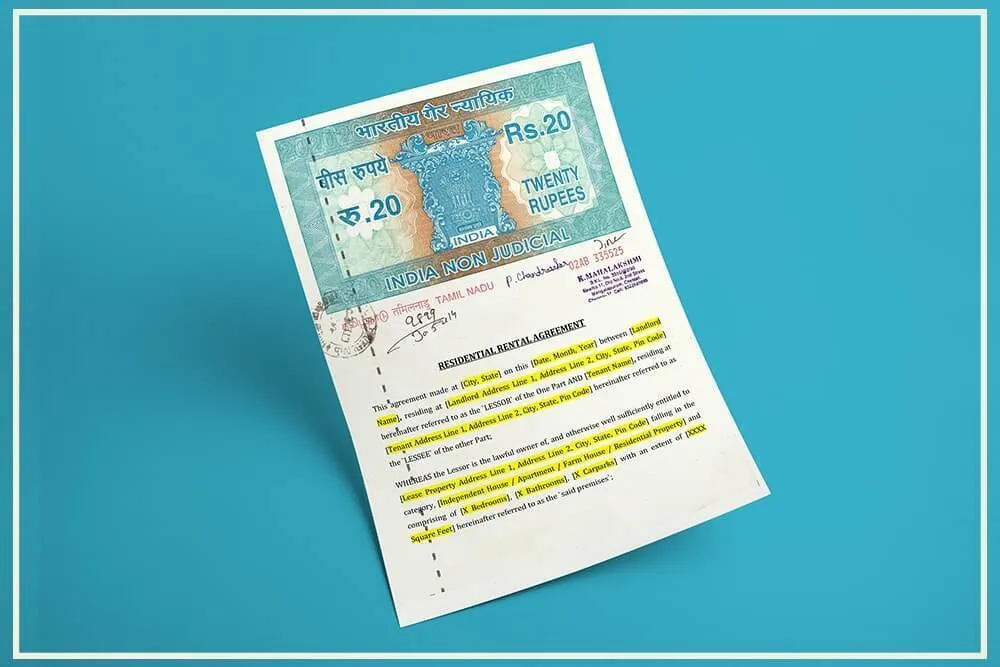
In India, a rent agreement is more than just a document outlining the terms between a landlord and tenant. It can also serve as a valid address proof for various official purposes. Whether you are applying for a passport, updating your Aadhaar card, or opening a bank account, a properly executed rent agreement can be your go-to document. This guide will walk you through everything you need to know about using your rent agreement as address proof.
Why Rent Agreements Are Accepted as Address Proof
Rent agreements are widely accepted as address proof because they provide a legal record of your residence. Government and financial institutions recognize them as reliable documents because they are typically registered or notarized, adding a layer of authenticity. This makes them a trusted source for verifying your address.
Types of Rent Agreements and Their Validity
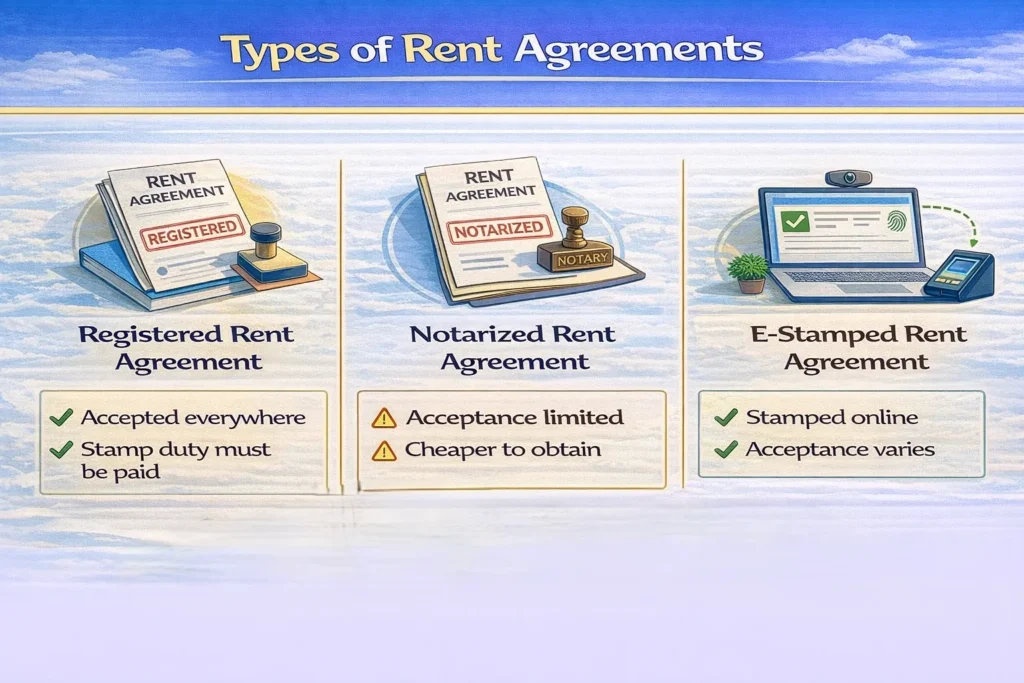
Not all rent agreements are created equal. The validity of your rent agreement as address proof largely depends on how it has been executed. Here are the main types:
Registered Rent Agreement
A registered rent agreement is one that has been recorded with the local sub-registrar office. This type of agreement is legally binding and widely accepted by all government and financial institutions. The registration process involves paying a stamp duty and registration fee, which varies from state to state.
Notarized Rent Agreement
A notarized rent agreement is one that has been certified by a notary public. While it is easier and cheaper to obtain compared to a registered agreement, its acceptance as address proof can be limited. Some institutions may not accept a notarized agreement, so it’s always best to check beforehand.
E-Stamped Rent Agreement
An e-stamped rent agreement is one that has been stamped electronically. This type of agreement is becoming increasingly popular due to its convenience. However, its acceptance as address proof can vary. Some institutions may require additional documentation or verification.
Must-Have Details in Your Agreement
For your rent agreement to be accepted as address proof, it must contain certain essential details. These include:
- Names and Addresses: Full names and addresses of both the landlord and the tenant.
- Property Details: Complete address of the rental property, including landmarks and pin code.
- Duration of Rent: The start and end dates of the rental period.
- Rent Amount: The monthly rent amount and the due date for payment.
- Signatures: Signatures of both the landlord and the tenant, along with the date of signing.
- Witnesses: Signatures of at least two witnesses.
- Stamp Duty and Registration Details: If applicable, details of the stamp duty paid and registration number.
How to Register a Rent Agreement: Step-by-Step
Registering a rent agreement involves several steps. Here’s a step-by-step guide to help you through the process:
- Draft the Agreement: Prepare the rent agreement with all the necessary details. You can use a standard template or hire a lawyer to draft it for you.
- Pay Stamp Duty: Calculate the stamp duty based on the rental amount and duration. Pay the stamp duty online or at an authorized bank.
- Print the Agreement: Print the agreement on stamp paper of the appropriate value.
- Sign the Agreement: Both the landlord and the tenant should sign the agreement in the presence of two witnesses.
- Visit the Sub-Registrar Office: Take the signed agreement to the local sub-registrar office along with the necessary documents, such as identity proof and address proof of both parties.
- Pay Registration Fee: Pay the registration fee at the sub-registrar office.
- Submit the Agreement: Submit the agreement for registration. The sub-registrar will verify the details and register the agreement.
- Collect the Registered Agreement: Once the registration is complete, collect the registered agreement from the sub-registrar office.
Official Use Cases and Requirements
A registered rent agreement can be used as address proof for various official purposes. Here are some common use cases and their specific requirements:
Passport Seva Kendra / Police Verification
When applying for a passport, you can use a registered rent agreement as address proof. The agreement must be registered and should not be older than one year. Additionally, you may need to provide a No Objection Certificate (NOC) from your landlord.
Aadhaar and PAN Update
For updating your address in Aadhaar or PAN, a registered rent agreement is generally accepted. Ensure that the agreement is registered and contains all the necessary details. You may also need to provide a copy of your landlord’s identity proof.
Bank KYC and Loan Applications
Banks accept registered rent agreements as address proof for KYC and loan applications. The agreement must be registered and should not be older than six months. Some banks may also require additional documents, such as a utility bill in your name.
Other Government ID and Services
A registered rent agreement can also be used for various other government services, such as applying for a driving license, voter ID, or ration card. The specific requirements may vary, so it’s always best to check with the respective authority.
Common Pitfalls and How to Avoid Rejection

While rent agreements are widely accepted as address proof, there are some common pitfalls that can lead to rejection. Here are a few things to keep in mind:
- Incomplete Details: Ensure that your rent agreement contains all the necessary details. Missing information can lead to rejection.
- Unregistered Agreement: An unregistered rent agreement may not be accepted by all institutions. Always opt for a registered agreement to avoid any issues.
- Old Agreement: Some institutions may not accept rent agreements that are older than a certain period. Ensure that your agreement is up-to-date.
- Incorrect Stamp Duty: Paying incorrect stamp duty can lead to rejection. Always calculate the stamp duty accurately and pay the correct amount.
- Missing Signatures: Ensure that the agreement is signed by both the landlord and the tenant, along with two witnesses. Missing signatures can lead to rejection.
What If You Don’t Have a Proper Rent Agreement?
If you don’t have a proper rent agreement, there are alternative documents you can use as address proof. These include:
- Utility Bills: Electricity, water, or gas bills in your name.
- Bank Statements: Bank statements or passbooks with your address.
- Voter ID: Voter ID card with your current address.
- Driving License: Driving license with your current address.
- Aadhaar Card: Aadhaar card with your current address.
- Ration Card: Ration card with your current address.
FAQs
Q: Can a notarized rent agreement be used as address proof?
A: While a notarized rent agreement can be used as address proof, its acceptance may be limited. Some institutions may require a registered agreement.
Q: How long is a rent agreement valid as address proof?
A: The validity of a rent agreement as address proof can vary. Some institutions may accept agreements that are up to one year old, while others may require more recent documents.
Q: Can I use an e-stamped rent agreement as address proof?
A: An e-stamped rent agreement can be used as address proof, but its acceptance may vary. Some institutions may require additional documentation or verification.
Q: What should I do if my rent agreement is rejected as address proof?
A: If your rent agreement is rejected, you can provide alternative documents such as utility bills, bank statements, or government-issued IDs with your current address.
Also Read: What is a E-Khata
Also Read: How much security deposit to be collected by owner while giving property on rent in India?


0 Comments